
Quilava
Best Graded Quilava Cards: Collector & Investor Guide
By Kyle Eggleston · Published May 13, 2026
Quilava sits in a sweet spot for Johto collectors: it is a true middle-evolution favorite from the original Gold and Silver era, but it also appears far less often than headline Pokémon like Typhlosion or Cyndaquil. That makes the best Quilava cards especially appealing to set builders, evolution-line collectors, and fans focused on Gen 2 nostalgia. For collectors, the key Quilava eras start with the Neo block and continue through the early e-Reader period, later HGSS-era releases, and select modern Japanese cards. Graded PSA, BGS, and CGC slabs matter because condition-sensitive vintage commons and uncommons can become surprisingly scarce in top grades, and population data helps buyers separate truly tough copies from cards that are simply easy to find raw.
Why Quilava Cards Are Worth Collecting
Quilava has the kind of collector profile that often ages well: strong nostalgia, a memorable Johto design, and a card history concentrated in respected vintage eras. While it is not a chase mascot on the level of Charizard or Lugia, that is part of the appeal. Quilava cards are often overlooked by casual buyers, which creates opportunities for disciplined collectors who want scarce PSA 10 copies without competing in the most crowded segments of the market.
Artwork also plays a big role. Quilava's early Neo and e-Reader cards capture the classic Gold and Silver aesthetic that many long-time Pokémon TCG fans still prefer. For evolution-line collectors, graded Quilava cards fit naturally beside Cyndaquil and Typhlosion, making them useful not only as standalone pickups but also as part of a broader Johto-focused slab collection.
What Makes a Graded Quilava Card Valuable?
- Grade (PSA 10 commands highest premiums)
- Set and era (Neo Genesis/Discovery/Revelation/Destiny vs modern sets)
- Rarity and print run
- Population report scarcity
- Recent sold comps on eBay
- Japanese vs English versions
- PSA 10 vs raw comparison
The Best Graded Quilava Cards to Collect
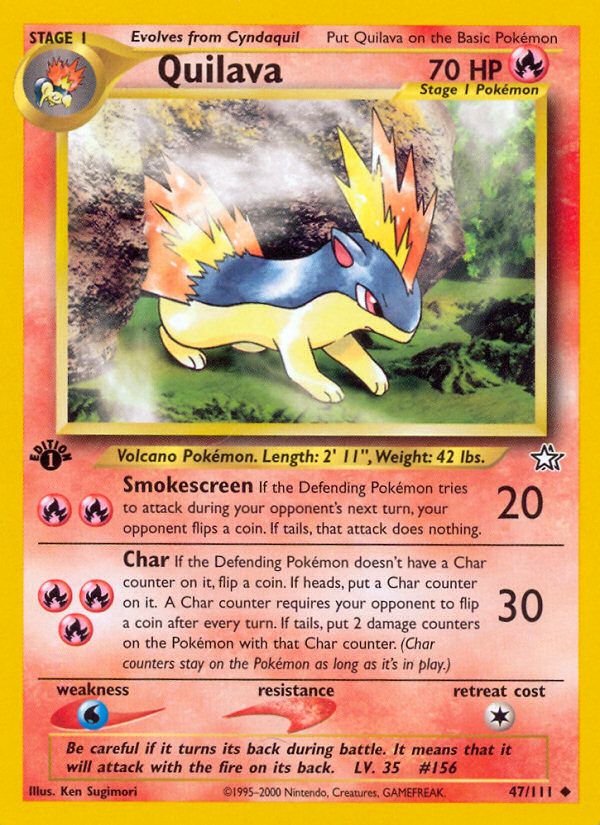
1. Quilava - Neo Genesis 47/111
This is the foundational English Quilava card for many collectors and the first place most Johto-focused sets begin. As an early WotC-era uncommon from the debut Johto expansion, it carries strong nostalgia and broad recognition, especially among collectors building complete Neo Genesis lines.
In PSA 10, this card matters because vintage uncommons can be more condition-sensitive than many raw buyers expect. Centering, edge wear, and print quality all affect top-grade supply, so a clean slabbed example often stands out far more than a stack of raw copies.
2. Dark Quilava - Neo Destiny 39/105
Dark Quilava gives collectors a more character-driven take on the species and ties directly into the beloved Dark Pokémon subset from Neo Destiny. Even as a non-holo, it benefits from the set's reputation as one of the strongest late WotC releases.
For graded buyers, this is a smart card to watch because Neo Destiny demand remains healthy across the board. If you collect storyline-heavy vintage cards or prefer cards with a distinctly different identity from the standard evolution-line versions, Dark Quilava is an easy recommendation.
3. Quilava - Expedition Base Set 106/165
Expedition Base Set marks Quilava's move into the e-Reader era, and that alone gives it a different collector base than the Neo cards. The border design, dot-code layout, and early Nintendo-era transition feel make Expedition cards especially attractive in slabs.
English Expedition cards can be deceptively tough in gem mint condition because print lines and edge issues are common enough to matter. For buyers, this is one of the best Quilava cards if you want something vintage that still feels visually distinct from the older WotC template.
4. Quilava - Aquapolis 94/147
Aquapolis is one of the most respected e-Series sets, and Quilava's appearance here benefits from that halo effect. Even without holo status, cards from Aquapolis tend to attract serious collectors because of the set's lower print familiarity, strong artwork, and prestige among long-term Pokémon TCG fans.
A PSA 10 Aquapolis Quilava can be a very satisfying niche pickup. It appeals to both Quilava collectors and e-Series specialists, which gives it broader crossover demand than many middle-evolution cards usually receive.
5. Quilava - EX Sandstorm 45/100
Quilava from EX Sandstorm represents an important shift into the early EX era, when collector attention moves beyond pure WotC nostalgia and into lower-population 2003 releases. That makes it a useful card for collectors who want a longer historical run of Quilava appearances.
Because EX-era non-holos are often underappreciated, high-grade copies can offer a better mix of affordability and scarcity than more heavily targeted chase cards. This is a strong collector pick if you want a slab that sits between true vintage and modern eras.
6. Quilava - HS. Unleashed 42/95
HS. Unleashed brought Johto Pokémon back into focus for a newer generation of collectors, and Quilava fits naturally into that HeartGold & SoulSilver revival. The set has a loyal following, and this card works well for collectors who want an English-era Quilava that is newer than Neo but still old enough to feel established.
PSA 10 examples can be attractive because many HGSS cards suffered from common handling and storage wear over time. If you collect complete Cyndaquil-Quilava-Typhlosion graded lines, this is one of the more practical mid-era additions.
7. Quilava - Call of Legends 47/95
Call of Legends has developed a stronger collector reputation over time, and Quilava's inclusion gives Johto fans another notable English option from the HGSS period. The set's identity as a smaller, somewhat specialized release helps cards from it stand apart from standard expansion staples.
For slab buyers, this card is appealing when you want a graded Quilava from a set that has become more appreciated with hindsight. It is not the flashiest Quilava ever printed, but it fits well in focused Johto and HGSS-era collections.
8. Quilava - EX Team Rocket Returns 49/109
EX Team Rocket Returns is a set many serious collectors respect for its theme, scarcity, and long-term collector demand. While Quilava is not a headline Dark or ex card here, simply appearing in this set adds meaningful interest for set completists and evolution-line collectors.
A PSA 10 copy can be worth pursuing because Team Rocket Returns material is popular across many character lines. If you like historical context and tougher early-2000s issues, this card offers more collector depth than its rarity level might suggest.
9. Quilava - Triumphant 50/102
Triumphant is another Johto-friendly HGSS-era release, and Quilava's card from the set gives collectors a clean option from a period that still has room for growth in the graded market. It is especially useful for collectors assembling a timeline of Quilava across major English eras.
This is usually a more accessible slab than the top vintage choices, but grade still matters. Strong eye appeal and clean surfaces are important because HGSS-era cards can look excellent in PSA 10 holders and display well alongside other Johto evolution cards.
10. Quilava - Japanese Neo Genesis
For collectors willing to include Japanese cards, the original Japanese Neo Genesis Quilava is an essential companion to the English release. Japanese Neo cards are often praised for sharper print quality and cleaner surfaces, which can make them especially attractive in top-grade slabs.
The value dynamic is different from English, with Japanese copies sometimes offering a more affordable route into vintage gem mint condition while still carrying authentic era appeal. For collectors building a serious Quilava run, owning both English and Japanese Neo Genesis versions is a very logical goal.
Vintage vs Modern Quilava Cards
Vintage Quilava cards, especially from Neo Genesis, Neo Destiny, Expedition, and Aquapolis, remain the strongest long-term collector pieces because they combine era prestige, lower surviving gem-mint supply, and deeper nostalgia. More modern Quilava cards can still be worthwhile, particularly for affordable graded collecting, but vintage examples generally offer the better mix of historical importance and scarcity for investors focused on durable demand.
How to Track Quilava Card Prices
Use eBay sold listings, PriceCharting, and PSA pop reports to gauge value. Slabfolio lets you look up graded card prices, upload your slab, and track your portfolio in one place.
FAQ
What is the rarest Quilava card?
Among widely recognized English releases, high-grade copies from tougher vintage sets like Aquapolis and Expedition can be harder to locate than most collectors expect. Japanese-exclusive or lower-population niche issues can also be scarcer in top grades depending on the grading company population data.
Is PSA 10 Quilava worth buying?
Yes, if you collect Johto, vintage WotC, or evolution-line Pokémon. PSA 10 Quilava cards are usually more affordable than top-tier star Pokémon, but they can still be legitimately scarce in older sets.
How do I find Quilava card prices?
Check eBay sold listings for recent market activity, compare with PriceCharting when available, and review PSA population reports to understand supply. Using all three together gives a much clearer picture than raw listing prices alone.
Prices as of Oct 21, 2026
- 1
Quilava PSA 10
Neo Genesis · 2000 · 47/111
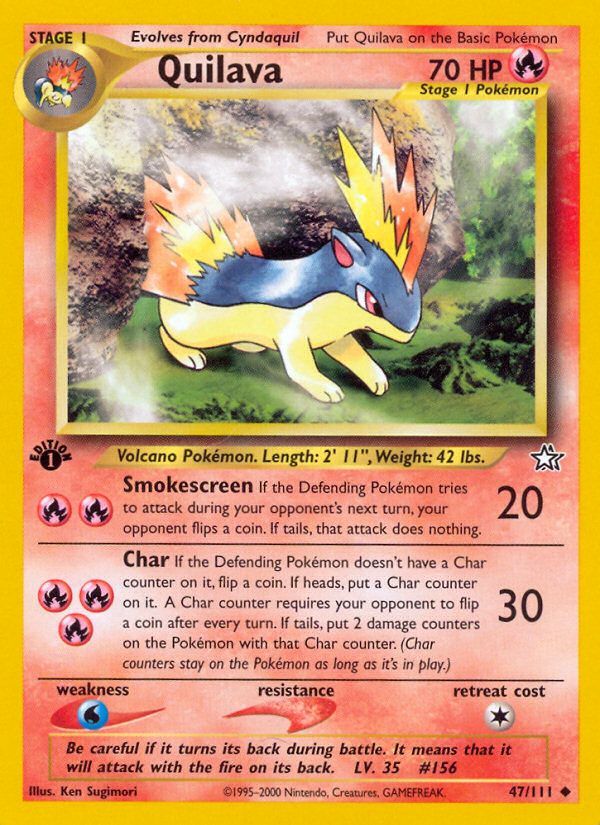
Quilava's first English TCG appearance came in Neo Genesis, the landmark set that introduced Johto Pokémon to the mainline card game. It remains the baseline card for serious Quilava collectors and a key piece for Cyndaquil evolution-line runs.
Prioritize strong centering and clean edges, since vintage uncommons can be surprisingly tough in true gem mint condition.
Estimated value: $4.17
- 2
Dark Quilava PSA 10
Neo Destiny · 2002 · 39/105
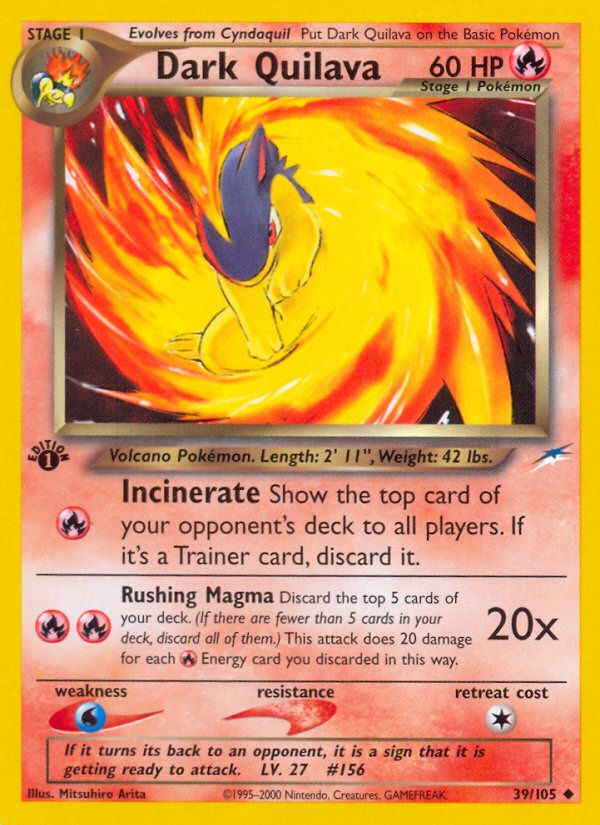
Dark Quilava is one of the most thematic Quilava cards ever printed, tying the Pokémon to Neo Destiny's popular Dark Pokémon concept. Its set placement gives it lasting appeal beyond ordinary uncommon status.
Buy this card if you want a more distinctive Quilava than the standard evolution-line versions.
Estimated value: $4.79
- 3
Quilava PSA 10
Expedition Base Set · 2002 · 106/165
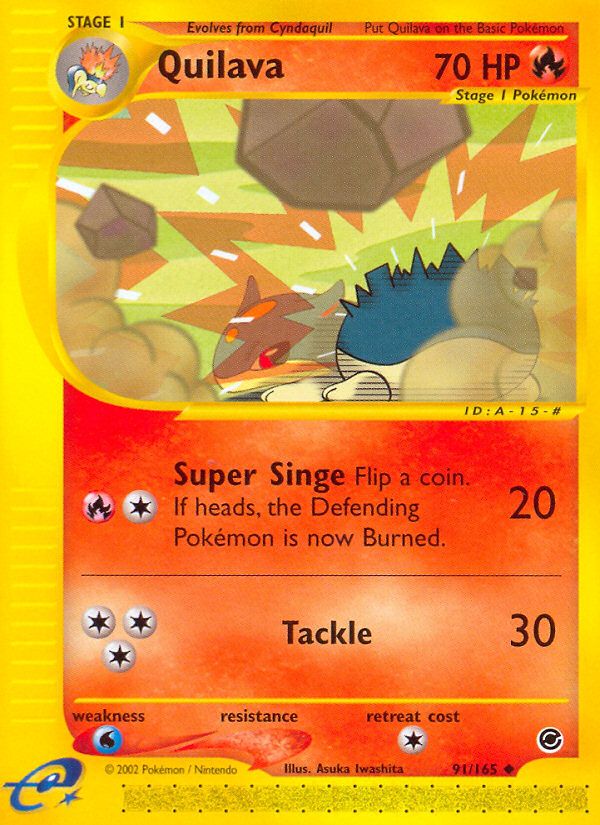
Expedition Base Set brought Quilava into the e-Reader era, giving the card a very different visual identity from its Neo-era predecessor. The set is important historically as the start of Pokémon's e-Series period in English.
Look closely for print quality issues and surface wear, which matter a lot on e-Reader cards.
Estimated value: $10.49
- 4
Quilava PSA 10
Aquapolis · 2003 · 94/147
Aquapolis is one of the most collector-respected e-Series sets, and Quilava benefits from that reputation. Even as a non-holo, it attracts attention from set builders and Johto specialists.
This is a great crossover card for collectors who love both Quilava and premium e-Series sets.
- 5
Quilava PSA 10
EX Sandstorm · 2003 · 45/100
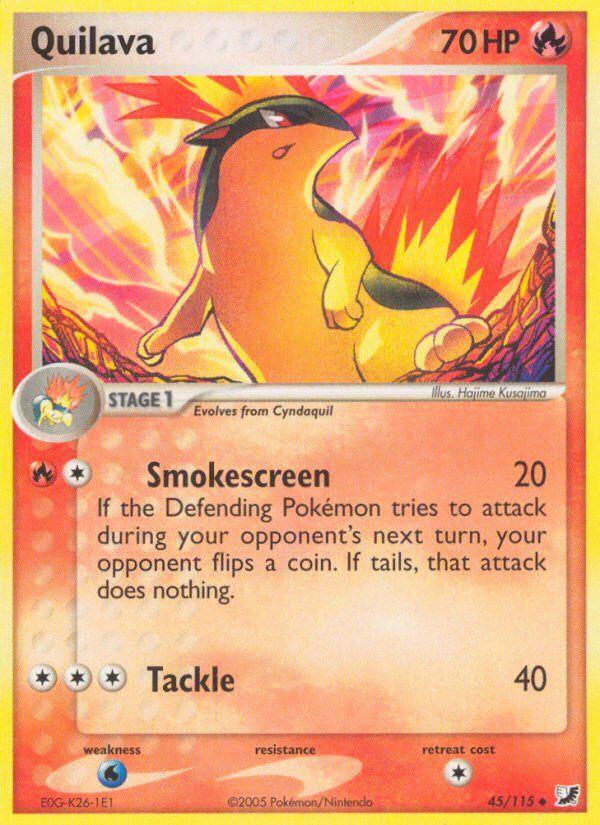
EX Sandstorm gives Quilava an early EX-era appearance, making it important for collectors building a full historical timeline of the species. Cards from this period can be underrated in top grades compared with their true scarcity.
A strong pickup for collectors who want early-2000s scarcity without paying chase-card premiums.
Estimated value: $10.49
- 6
Quilava PSA 10
HS. Unleashed · 2010 · 42/95
HS. Unleashed reintroduced Johto favorites during the HeartGold & SoulSilver era and gave Quilava another meaningful English appearance. It is a natural fit for collectors who like modern-era cards with classic regional nostalgia.
This card works especially well in a graded Cyndaquil-Quilava-Typhlosion evolution set.
- 7
Quilava PSA 10
Call of Legends · 2011 · 47/95
Call of Legends has become more appreciated over time, and Quilava's card from the set benefits from that growing collector interest. It stands out as a later-era English Quilava from a comparatively specialized release.
Consider this if you want an HGSS-era slab that feels a bit less common than standard expansion cards.
Estimated value: $1.69
- 8
Quilava PSA 10
EX Team Rocket Returns · 2004 · 49/109
Quilava's appearance in EX Team Rocket Returns adds depth to any species collection because the set is so well regarded among advanced collectors. Its appeal comes from the set's reputation and the relative toughness of early EX-era high grades.
Set collectors often compete for Team Rocket Returns cards, so gem mint copies can command more interest than expected.
Estimated value: $10.49
- 9
Quilava PSA 10
Triumphant · 2010 · 50/102
Triumphant gives Quilava another strong HGSS-era showing and helps round out a broader English master run. It is a useful card for collectors who want a balanced mix of vintage and mid-era slabs.
Focus on eye appeal, since clean HGSS cards display especially well in high-grade holders.
- 10
Quilava PSA 10
Japanese Neo Genesis · 1999 · 156
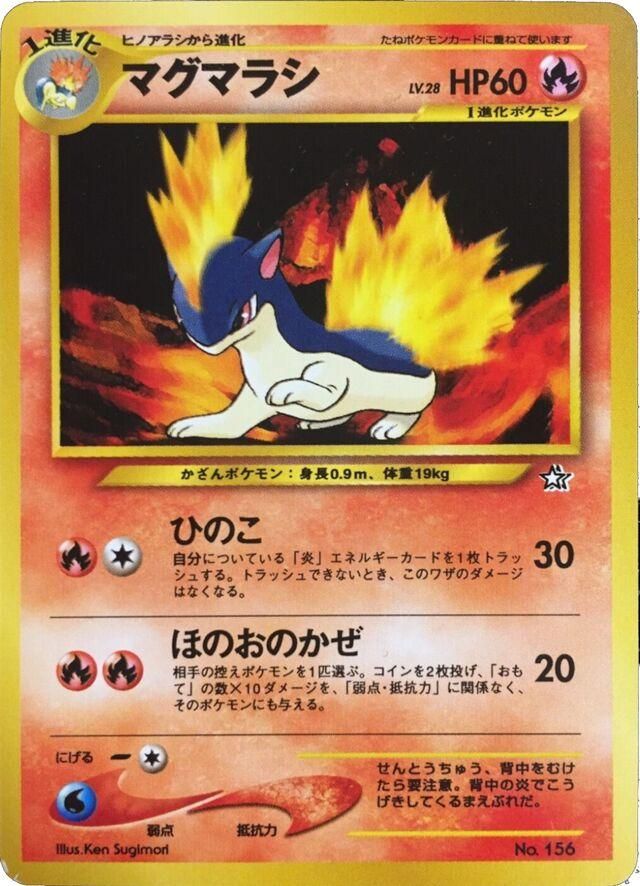
The original Japanese Neo Genesis Quilava predates the English release and is an essential pick for completists. Japanese Neo cards are admired for print quality and often provide a different value path for vintage slab collectors.
Pair this with the English Neo Genesis card if you want the most complete vintage Quilava display.
Estimated value: $2.29
Frequently asked questions
What is the rarest Quilava card?
Among widely recognized English releases, high-grade copies from tougher vintage sets like Aquapolis and Expedition can be harder to locate than most collectors expect. Japanese-exclusive or lower-population niche issues can also be scarcer in top grades depending on the grading company population data.
Is PSA 10 Quilava worth buying?
Yes, if you collect Johto, vintage WotC, or evolution-line Pokémon. PSA 10 Quilava cards are usually more affordable than top-tier star Pokémon, but they can still be legitimately scarce in older sets.
How do I find Quilava card prices?
Check eBay sold listings for recent market activity, compare with PriceCharting when available, and review PSA population reports to understand supply. Using all three together gives a much clearer picture than raw listing prices alone.
Whether you're building your first graded Quilava collection or managing a larger Pokémon card portfolio, tracking real market movement matters. Slabfolio helps collectors organize slabs, monitor values, and follow graded card price changes over time.
Related guides
Best Graded Marill Cards: Collector & Investor Guide
Marill has been a favorite with collectors since the early Johto era, when its anime debut and distinctive round design made it one of the most memorable Pokémon of its generation.
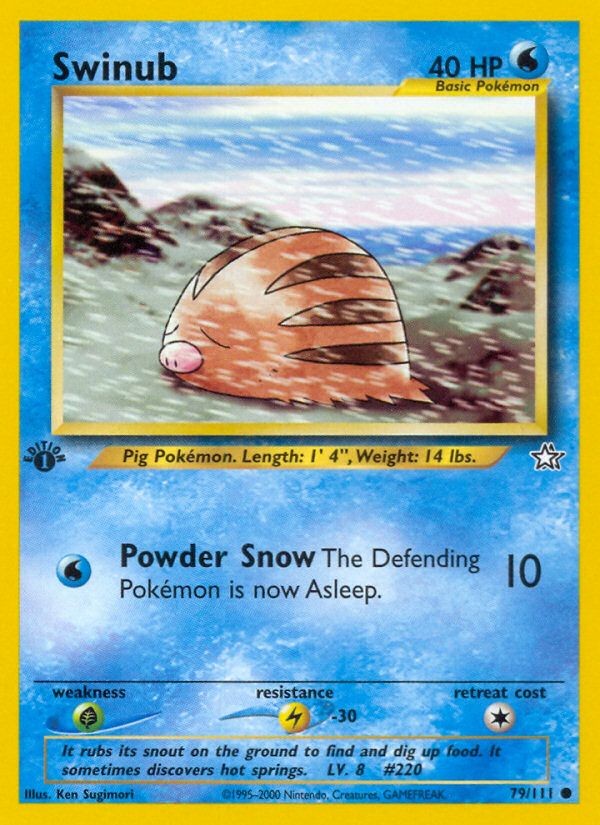
Best Graded Swinub Cards: Collector & Investor Guide
Swinub is a small Johto Pokémon, but its card history spans some of the most collectible eras in the hobby.
Best Graded Mantine Cards: Collector & Investor Guide
Mantine has never been the flashiest Johto Pokémon, but it has built a loyal following with collectors who appreciate Water-type artwork, Neo-era nostalgia, and a relatively small but interesting card checklist.
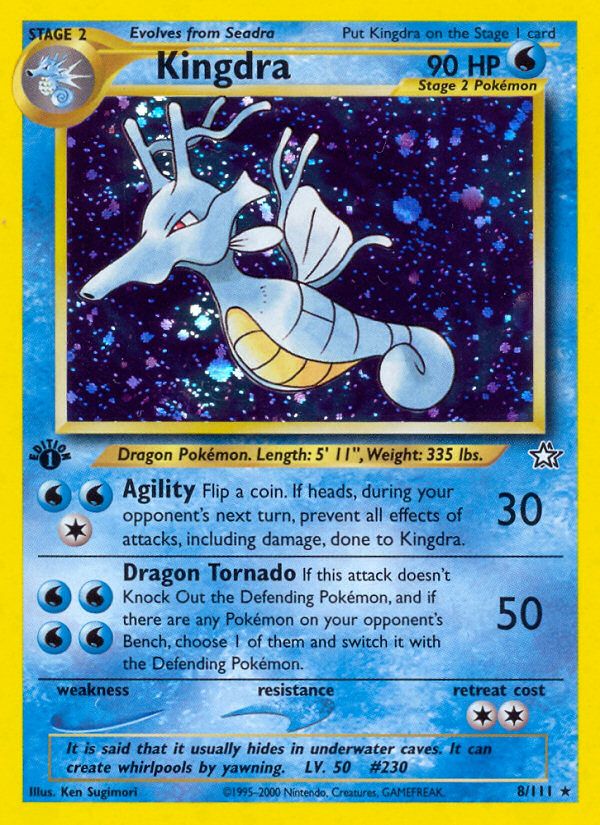
Best Graded Kingdra Cards: Collector & Investor Guide
Kingdra has always held a niche but respected place in the Pokémon TCG.
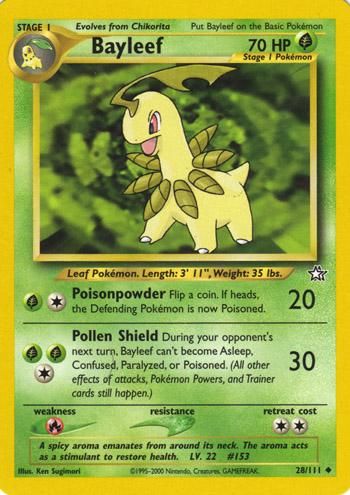
Best Graded Bayleef Cards: Collector & Investor Guide
Bayleef is one of the most nostalgic Stage 1 Johto Pokémon in the hobby, bridging the gap between beloved starter Chikorita and the more battle-focused Meganium.
Best Graded Ariados Cards: Collector & Investor Guide
Ariados has never been the flashiest Johto Pokémon, but that is exactly why it has a loyal collector base.