
Pupitar
Best Graded Pupitar Cards: Collector & Investor Guide
By Kyle Eggleston · Published May 13, 2026
Pupitar is a classic Johto-era Stage 1 that appeals to collectors who enjoy evolutionary lines, especially anyone building around Larvitar and Tyranitar. While it has never been a headline chase Pokémon on the level of its final evolution, Pupitar appears across several respected eras of the Pokémon TCG, from Neo sets to modern Scarlet & Violet releases. For graded collectors, Pupitar cards are interesting because condition sensitivity, lower submission volume, and set context can make even non-holo cards more desirable in top grades. PSA, BGS, and CGC slabs help standardize condition, make population data easier to track, and give collectors a clearer view of rarity and long-term value.
Why Pupitar Cards Are Worth Collecting
Pupitar cards sit in a sweet spot for collector appeal: they connect directly to the highly collected Tyranitar line while still feeling a bit overlooked. That makes them attractive to set builders, Johto specialists, and collectors who enjoy targeting lower-population character cards that are harder to find in pristine condition than many buyers expect.
Another big part of the appeal is era diversity. Pupitar shows up in vintage Neo-era Japanese cards, EX-era releases, and modern English sets, giving collectors plenty of ways to build a focused sub-collection. For graders, that range matters because print quality, centering, and surface issues vary widely by era.
What Makes a Graded Pupitar Card Valuable?
- Grade (PSA 10 commands highest premiums)
- Set and era (Neo Genesis/Discovery/Revelation/Destiny vs modern sets)
- Rarity and print run
- Population report scarcity
- Recent sold comps on eBay
- Japanese vs English versions
- PSA 10 vs raw comparison
The Best Graded Pupitar Cards to Collect
1. Pupitar. Mysterious Mountains 039/088
This Japanese-exclusive e-Reader era Pupitar is one of the strongest collector picks because Mysterious Mountains is the Japanese counterpart to Skyridge, one of the most respected and difficult-to-complete eras in the hobby. Even non-holo cards from this period carry premium interest when they feature popular evolutionary lines.
In high grade, this card benefits from era prestige and relatively lower grading volume compared with mainstream English modern releases. Japanese copies also tend to attract collectors who are building Tyranitar line runs across premium late-WotC and e-Reader sets.
2. Pupitar. Split Earth 033/088
Split Earth is another elite Japanese e-Reader set and gives Pupitar a collectible card tied to the Aquapolis era. For collectors who like art continuity and niche Johto evolution lines, this is a strong slab target that feels meaningfully scarcer in the market than many later English prints.
When buying graded copies, pay close attention to edge wear and print lines. Japanese e-Reader cards often look sharp in hand, but true gem-mint examples still stand out and can carry stronger long-term demand from advanced set collectors.
3. Pupitar. Skyridge 76/144
Skyridge remains one of the most iconic English Pokémon TCG sets ever printed, so even a non-holo Pupitar from the set has real collector relevance. It is especially attractive for English set builders who want every stage of the Tyranitar line represented in a premium WotC-era release.
PSA 10 copies can be difficult enough to source that this card feels more special in a slab than raw checklist status might suggest. English Skyridge cards also tend to draw more broad market attention than many Japanese counterparts, though Japanese can still offer better print consistency.
4. Pupitar. Aquapolis 70/147
Aquapolis is a respected e-Reader set with a strong collector base, and Pupitar 70/147 is a smart choice for anyone targeting English vintage slabs without jumping straight to the price levels associated with the biggest stars of the era. It has the look and feel collectors want from early-2000s Pokémon cards.
Compared with modern Pupitar cards, Aquapolis offers stronger era cachet and more natural scarcity in high grades. Buyers should watch for silvering, corner wear, and centering, especially on older raw copies that look clean at first glance.
5. Pupitar. EX Team Rocket Returns 41/109
EX Team Rocket Returns is one of the most popular EX-era sets, and Pupitar 41/109 benefits from that connection. Cards from this set are widely respected for both artwork and collectibility, making this one of the best mid-era graded Pupitar targets for collectors who want more than just Neo and e-Reader material.
This is a good card to compare in PSA 9 versus PSA 10 because condition-sensitive EX-era stock can create meaningful price gaps. It also appeals to collectors building dark or Tyranitar-adjacent themes from the mid-2000s period.
6. Pupitar. EX Sandstorm 49/100
Pupitar from EX Sandstorm is an early EX-era card tied to one of the foundational Ruby & Sapphire block releases. It is not flashy in the way later ultra rares are, but it has real collector merit because many early EX commons and uncommons are tougher in top grade than casual buyers assume.
For budget-conscious slab collectors, this can be a practical entry point into graded Pupitar cards from an older era. English EX cards often show edge and corner wear, so centering and surface quality matter a lot when choosing between similar graded copies.
7. Pupitar. Neo Discovery 45/75
Neo Discovery is one of the most nostalgic Johto-era sets, and Pupitar 45/75 is a natural fit for collectors building second-generation evolutionary lines. While it is a more modest card on paper, the set itself gives it strong vintage appeal and keeps it relevant for collectors focused on early Johto Pokémon.
Japanese Neo cards can sometimes be easier to find in cleaner condition, but English Neo Discovery still has a dedicated following. In PSA 10, cards like this become much more interesting because print and handling flaws on vintage non-holos can quietly cap gem-mint supply.
8. Pupitar. Neo Discovery 37/75
This alternate Neo Discovery Pupitar gives collectors another vintage option from the same beloved Johto era, and that alone makes it notable. For master set builders and Pupitar specialists, having both Neo Discovery entries matters because it shows how the Pokémon was represented across the set's uncommon slots.
As with many vintage non-holos, value often comes from grade scarcity more than raw-card demand. If you are choosing between raw and slabbed, the slab can provide much better confidence on condition for a card that may otherwise look deceptively similar across copies.
9. Pupitar. Paldea Evolved 111/193
Paldea Evolved gave Pupitar a modern English appearance that is easy to recognize and much more accessible than vintage cards. For collectors who want a clean PSA 10 without spending vintage e-Reader money, this is one of the best modern starting points.
Modern PSA 10s are usually easier to source than vintage gems, but that does not mean all copies are equal. Centering and print quality still matter, and this card works well for collectors building current-era Tyranitar line displays alongside older slabs.
10. Pupitar. Obsidian Flames 117/197
Obsidian Flames is another solid modern set inclusion for Pupitar collectors, and it gives the Pokémon a fresh, affordable slab target from the Scarlet & Violet era. These modern cards are useful for building a full timeline of Pupitar appearances without having to chase only older, scarcer releases.
From a collector perspective, this is more about clean presentation and lineup building than extreme rarity. Still, PSA 10 examples can be attractive for registry-style collectors who want consistency across every major Pupitar era.
Vintage vs Modern Pupitar Cards
Vintage Pupitar cards from Neo, e-Reader, and EX-era sets generally offer stronger long-term collector appeal because they combine nostalgia, lower surviving gem-mint supply, and more established set prestige. Modern cards are usually easier and cheaper to grade or buy in PSA 10, making them better entry points, but vintage slabs tend to carry more character and may prove more resilient as niche investment pieces.
How to Track Pupitar Card Prices
Use eBay sold listings, PriceCharting, and PSA pop reports to gauge value. Slabfolio lets you look up graded card prices, upload your slab, and track your portfolio in one place.
FAQ
What is the rarest Pupitar card?
Among widely recognized releases, Japanese e-Reader era Pupitar cards from premium sets like Mysterious Mountains and Split Earth can be among the toughest to source in top condition. True rarity also depends on grading population and how often copies actually reach the market.
Is PSA 10 Pupitar worth buying?
Yes, if you collect Johto, Tyranitar evolution lines, or niche character slabs. PSA 10 Pupitar cards often appeal more to focused collectors than mass-market buyers, which can create good long-term opportunities on the right vintage set.
How do I find Pupitar card prices?
Check eBay sold listings first, then compare with PriceCharting and PSA population data to understand grade scarcity. For organization and tracking, Slabfolio is useful for monitoring graded card values over time.
Prices as of Oct 21, 2026
- 1
Pupitar PSA 10
Mysterious Mountains · 2002 · 039/088

This Japanese Pupitar comes from Mysterious Mountains, the Japanese e-Reader set associated with the Skyridge era. It is a strong collector card because the set is highly respected and far scarcer in the market than most modern Pupitar releases.
Prioritize clean edges and strong centering, since gem-mint Japanese e-Reader cards still command a premium over raw copies.
Estimated value: $1.23
- 2
Pupitar PSA 10
Split Earth · 2002 · 033/088
Split Earth is a premium Japanese e-Reader release and gives Pupitar a desirable Aquapolis-era counterpart. The card has lasting appeal with collectors who focus on Johto lines and hard-to-find Japanese set cards.
Look for examples without print lines or edge whitening, as those issues can hold back otherwise strong copies.
- 3
Pupitar PSA 10
Skyridge · 2003 · 76/144
Skyridge is one of the most iconic English sets ever produced, which gives this Pupitar card outsized collector relevance despite being a non-holo. It is a favorite among English WotC-era completionists and Tyranitar line collectors.
Buy the best-centered copy you can, since PSA 10 Skyridge non-holos are often tougher than they first appear.
- 4
Pupitar PSA 10
Aquapolis · 2003 · 70/147
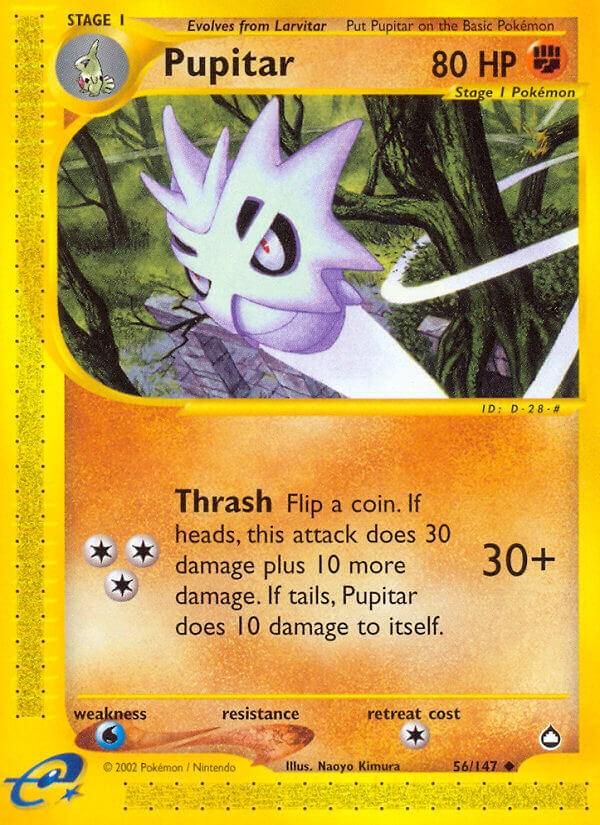
Aquapolis Pupitar is a standout English e-Reader era option that pairs nicely with other Tyranitar line cards from the same period. Its appeal comes from both the era's prestige and the lower supply of top-grade examples.
Check for silvering and corner wear before paying a premium for any high-grade vintage copy.
Estimated value: $8.24
- 5
Pupitar PSA 10
EX Team Rocket Returns · 2004 · 41/109

EX Team Rocket Returns remains one of the most collected EX-era sets, and that status helps elevate this Pupitar card. It is a strong mid-era slab for collectors who want something with more set prestige than a typical common evolution card.
Compare PSA 9 and PSA 10 pricing closely, because EX-era condition sensitivity can create large jumps.
Estimated value: $9.09
- 6
Pupitar PSA 10
EX Sandstorm · 2003 · 49/100

As an early EX-era Pupitar, this card has quiet appeal with collectors building foundational Ruby & Sapphire block runs. It is also a useful slab target for buyers who want vintage-era age without e-Reader-level pricing.
Watch for edge chipping and surface scratches, which are common on older EX-series raw cards.
Estimated value: $3.99
- 7
Pupitar PSA 10
Neo Discovery · 2001 · 45/75
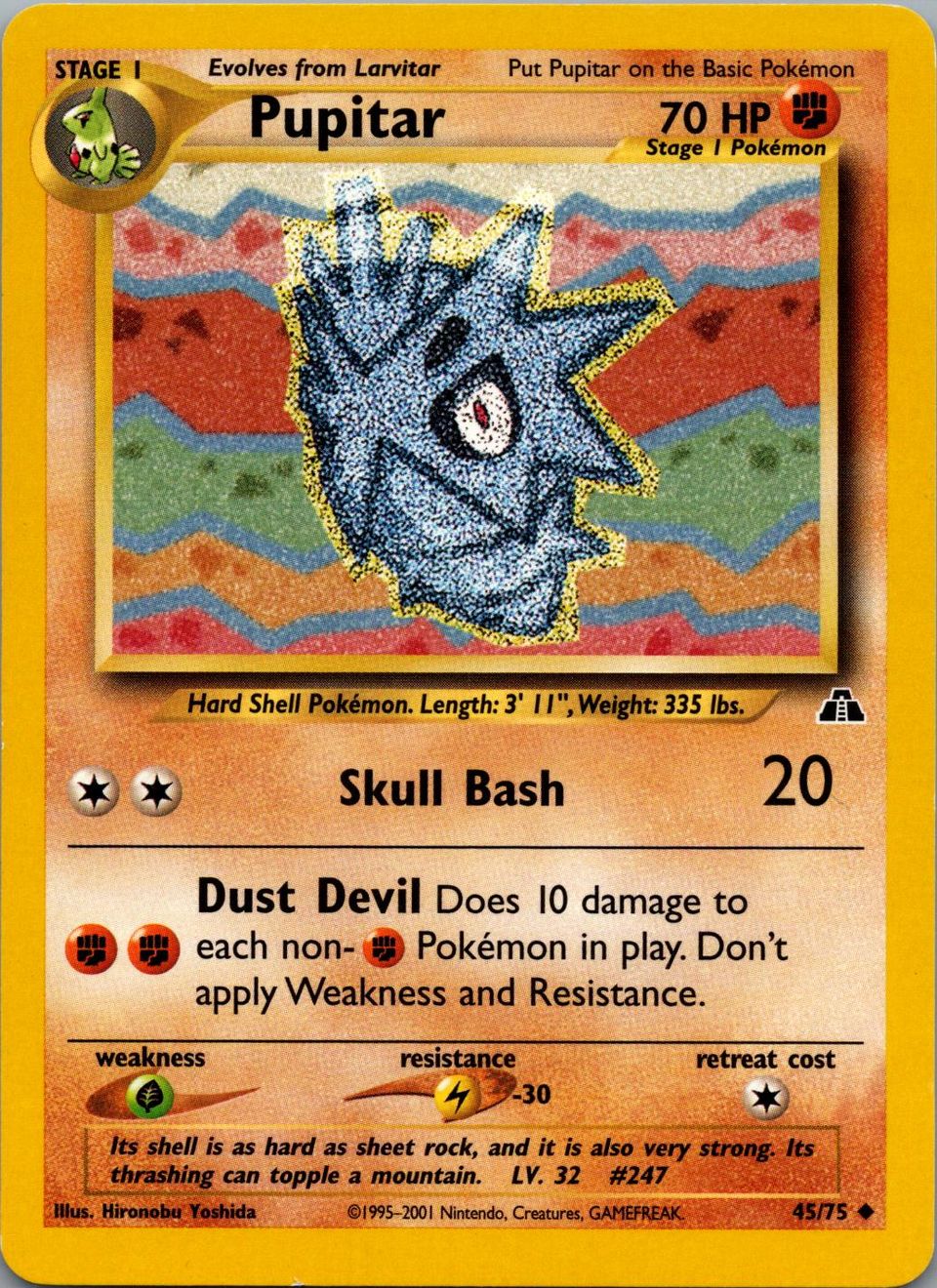
Neo Discovery is one of the core Johto-era sets, making this vintage Pupitar a natural pickup for second-generation collectors. Its value in grade comes more from nostalgic set demand and gem-mint difficulty than from raw scarcity alone.
Vintage Neo non-holos can be deceptively tough in PSA 10, so favor slab quality over raw quantity.
Estimated value: $1.75
- 8
Pupitar PSA 10
Neo Discovery · 2001 · 37/75
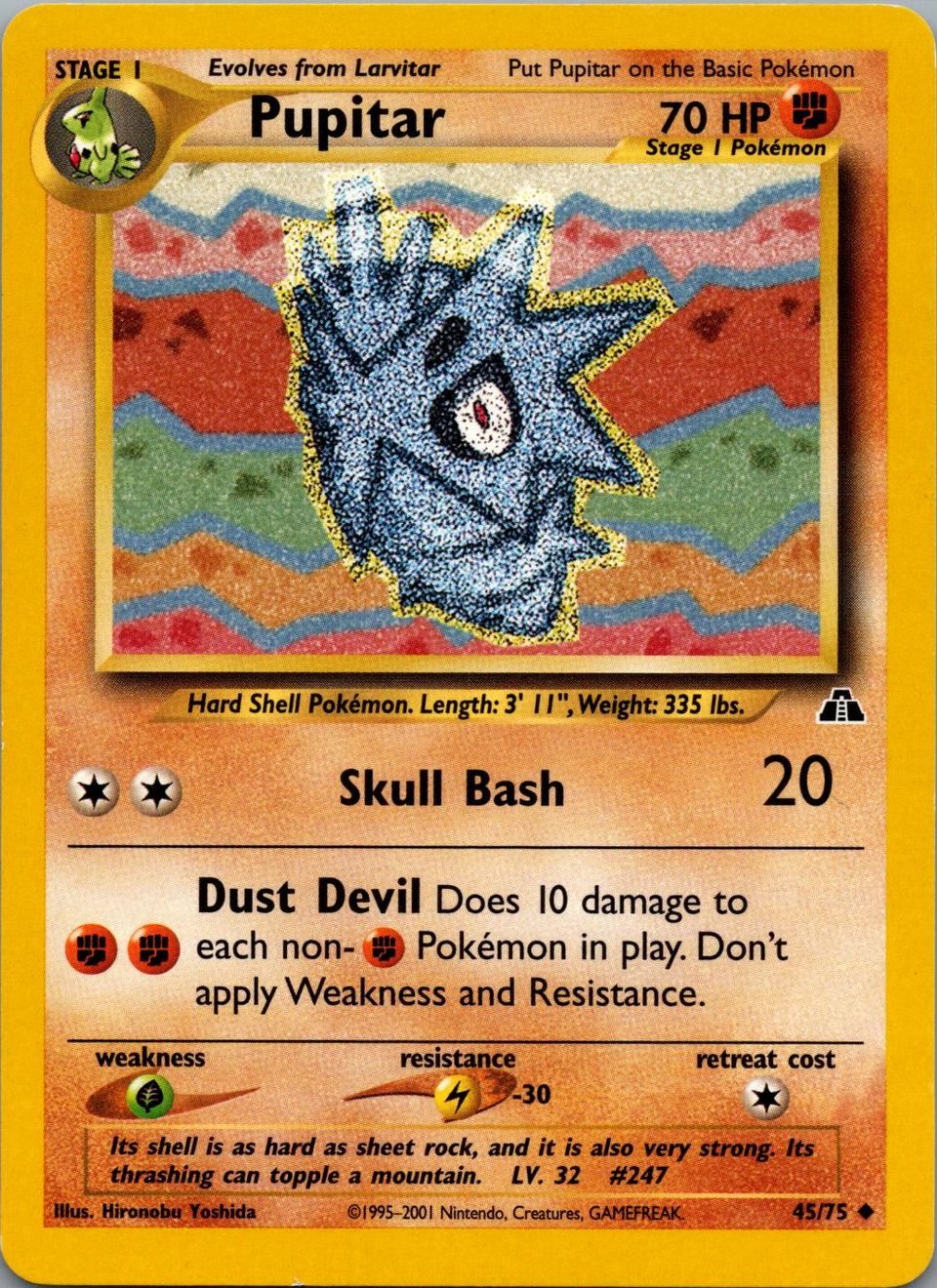
This Japanese Neo Discovery Pupitar gives collectors a vintage Johto-era counterpart to the English release. Japanese Neo cards remain popular because they often present more cleanly and fit well in language-specific Tyranitar evolution collections.
If you collect both languages, pair this with the English Neo Discovery Pupitar for a strong vintage two-card display.
Estimated value: $1.75
- 9
Pupitar PSA 10
Paldea Evolved · 2023 · 111/193
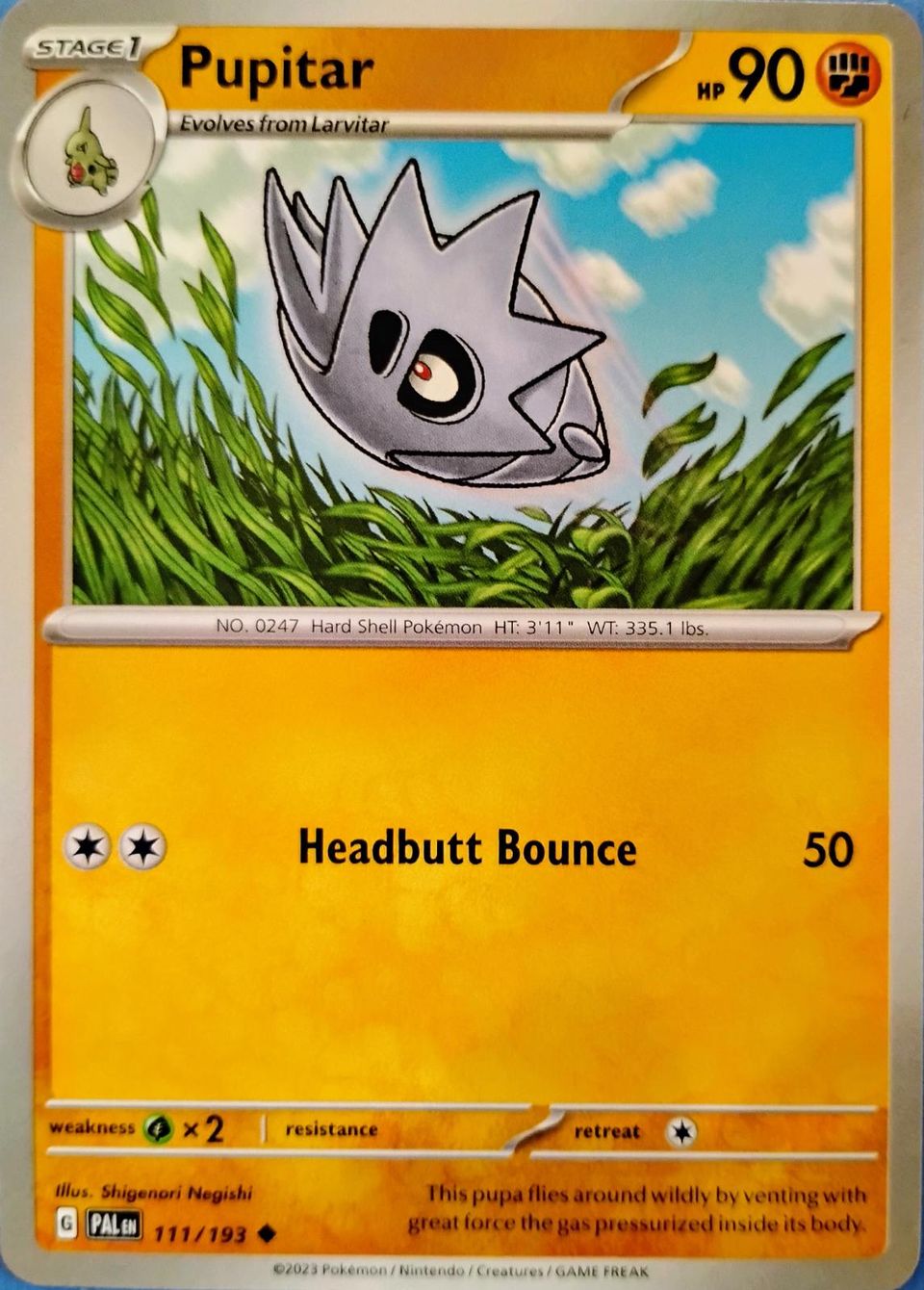
Paldea Evolved offers one of the cleanest modern English Pupitar options for collectors entering the character on a budget. It is accessible, easy to display in a PSA 10 holder, and a practical addition to a full Pupitar timeline.
Modern cards are easier to replace, so only pay PSA 10 premiums for copies with excellent centering and eye appeal.
Estimated value: $0.12
- 10
Pupitar PSA 10
Obsidian Flames · 2023 · 117/197
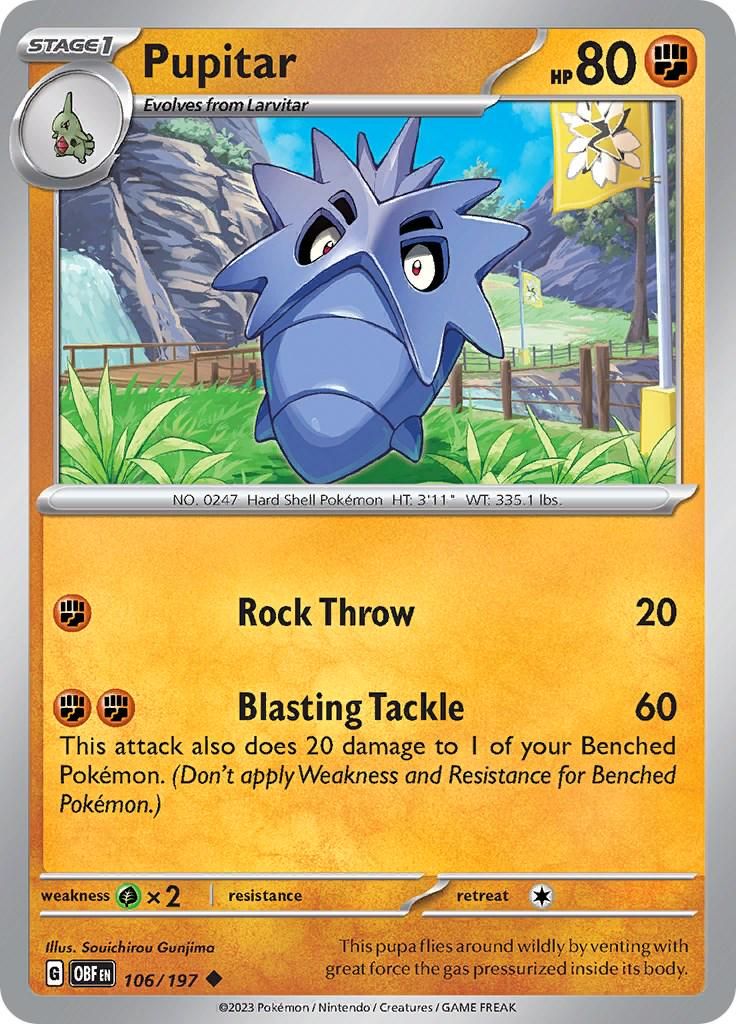
Obsidian Flames adds another modern Scarlet & Violet era Pupitar to the collector checklist. It is not a rarity-driven card, but it works very well for registry collectors and anyone building a complete graded run of Pupitar appearances.
This is a good affordable PSA 10 target if you want a modern counterpart beside your vintage Neo or e-Reader slabs.
Estimated value: $0.22
Frequently asked questions
What is the rarest Pupitar card?
Among widely recognized releases, Japanese e-Reader era Pupitar cards from premium sets like Mysterious Mountains and Split Earth can be among the toughest to source in top condition. True rarity also depends on grading population and how often copies actually reach the market.
Is PSA 10 Pupitar worth buying?
Yes, if you collect Johto, Tyranitar evolution lines, or niche character slabs. PSA 10 Pupitar cards often appeal more to focused collectors than mass-market buyers, which can create good long-term opportunities on the right vintage set.
How do I find Pupitar card prices?
Check eBay sold listings first, then compare with PriceCharting and PSA population data to understand grade scarcity. For organization and tracking, Slabfolio is useful for monitoring graded card values over time.
Whether you're building your first graded Pupitar collection or managing a larger Pokémon card portfolio, tracking real market movement matters. Slabfolio helps collectors organize slabs, monitor values, and follow graded card price changes over time.
Related guides
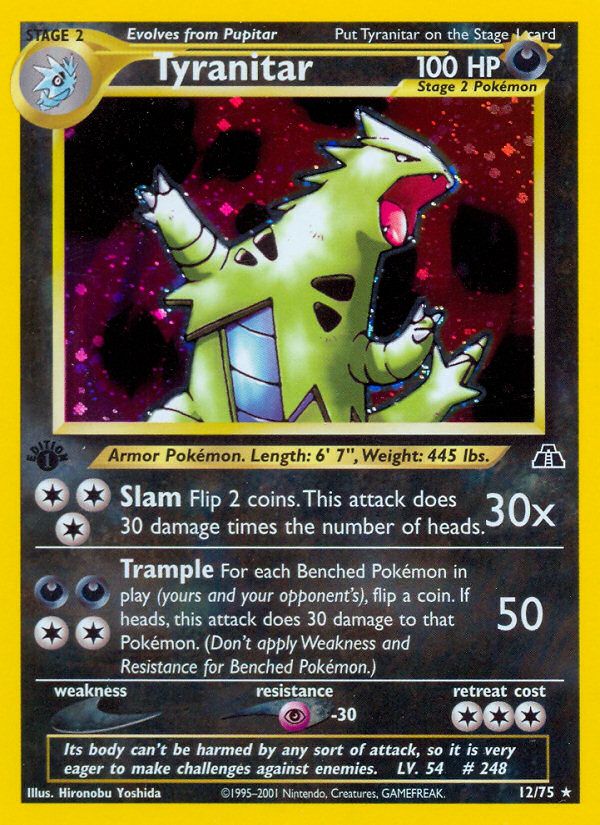
Best Graded Tyranitar Cards: Collector & Investor Guide
Tyranitar has been one of the most collectible Dark-type Pokémon in the hobby for years, blending Johto nostalgia with genuinely powerful artwork across multiple eras.
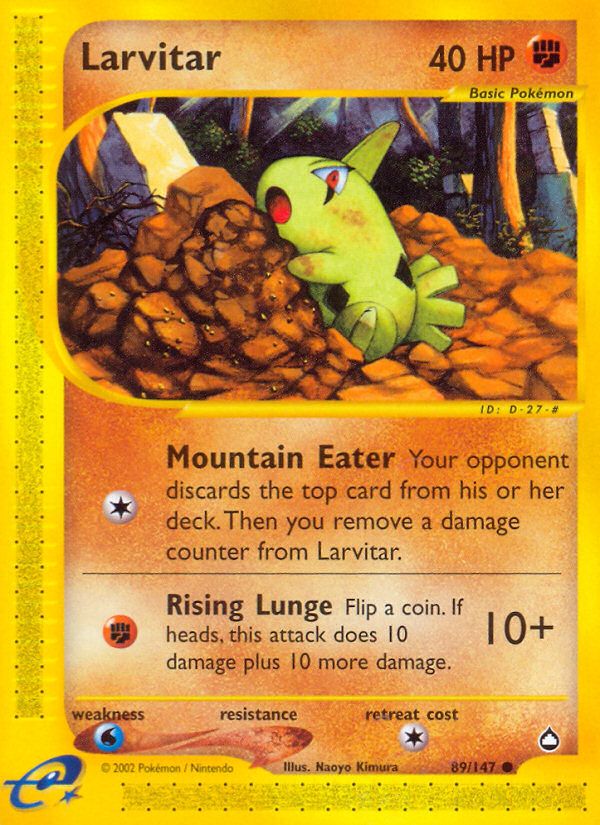
Best Graded Larvitar Cards: Collector & Investor Guide
Larvitar has always had a loyal following among Pokémon TCG collectors because it sits at the start of one of Johto’s most iconic evolution lines.
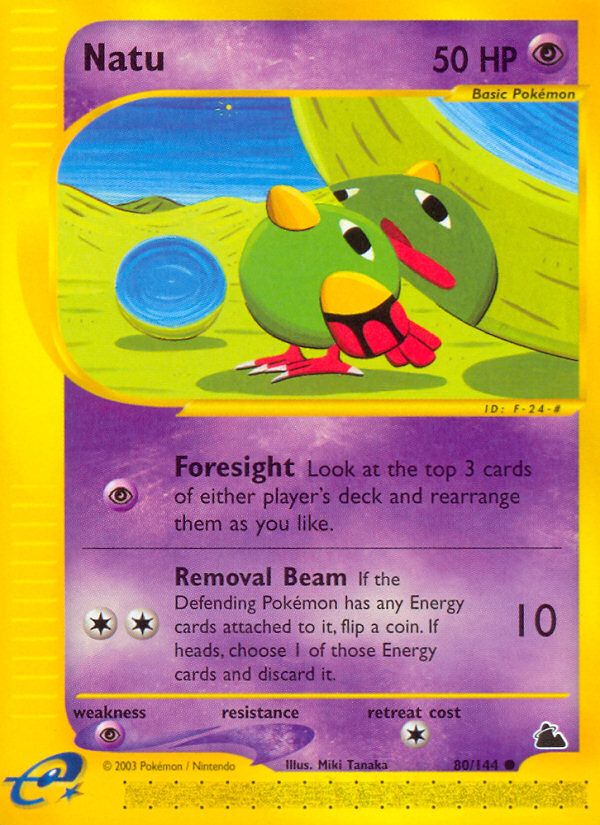
Best Graded Natu Cards: Collector & Investor Guide
Natu has never been the headline star of the Pokémon TCG, but that is exactly why it appeals to focused collectors.

Best Graded Azumarill Cards: Collector & Investor Guide
Azumarill has long been a favorite among Johto collectors thanks to its early Neo-era appearances, cheerful design, and crossover appeal with players who remember its rise from the Gold & Silver generation.

Best Graded Wooper Cards: Collector & Investor Guide
Wooper has always had a quiet but loyal following in the Pokémon TCG.
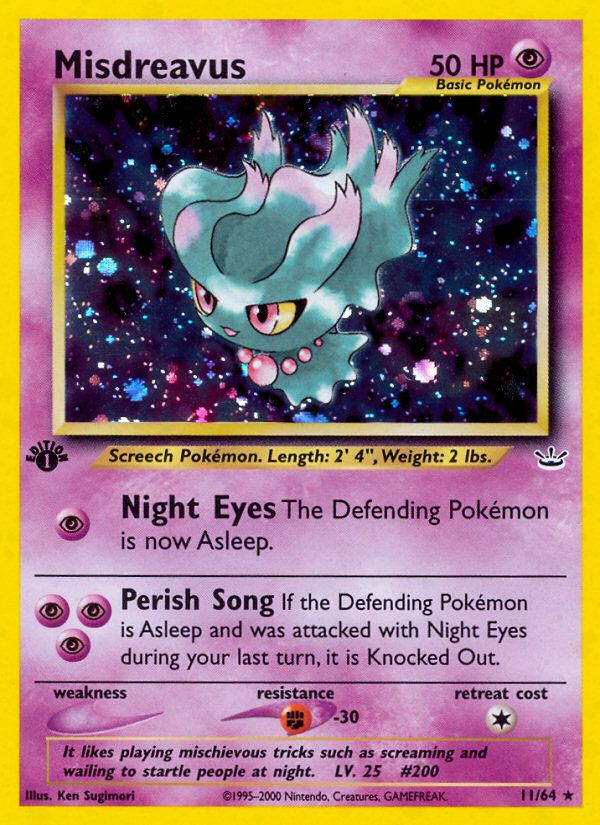
Best Graded Misdreavus Cards: Collector & Investor Guide
Misdreavus has always held a special place with Johto collectors.