
Jumpluff
Best Graded Jumpluff Cards: Collector & Investor Guide
By Kyle Eggleston · Published May 13, 2026
Jumpluff is one of those Johto Pokémon that quietly built a loyal collector base through the Neo era and beyond. It never chased the spotlight like Charizard or Lugia, but its airy design, memorable vintage holos, and repeat appearances in competitive-minded sets give it real depth for specialists. For collectors, the best Jumpluff cards span early Japanese and English Neo releases, ex-era printings, and modern revivals. Graded PSA, BGS, and CGC examples matter because condition sensitivity, low population counts in gem mint, and reliable sold data make slabs the clearest way to track scarcity and long-term value.
Why Jumpluff Cards Are Worth Collecting
Jumpluff cards appeal to a very specific kind of Pokémon collector: people who appreciate Johto-era artwork, lower-population character collections, and cards that feel nostalgic without being overhyped. The species has some genuinely attractive vintage treatments, especially in Neo-era holographics and Japanese-exclusive variants that can be much tougher to locate in top condition than many mainstream buyers expect.
There is also a real collector advantage with Jumpluff. Because it is not a headline character, many of its best cards remain relatively approachable compared with bigger names from the same era. That makes it a strong target for set builders, species collectors, and slab buyers who want scarcity, history, and visual appeal without paying top-of-market blue-chip premiums.
What Makes a Graded Jumpluff Card Valuable?
- Grade (PSA 10 commands highest premiums)
- Set and era (Neo Genesis/Discovery/Revelation/Destiny vs modern sets)
- Rarity and print run
- Population report scarcity
- Recent sold comps on eBay
- Japanese vs English versions
- PSA 10 vs raw comparison
The Best Graded Jumpluff Cards to Collect
1. Jumpluff - Neo Genesis 7/111
The English Neo Genesis holo is the cornerstone Jumpluff for most collectors. As one of the earliest major English appearances for the Pokémon, it carries the weight of first-era Johto nostalgia and remains the easiest vintage anchor for a serious graded species run.
In PSA 10, this card becomes much more compelling than raw copies because Neo Genesis holos are highly condition sensitive. Centering, holo scratching, and edge wear matter a lot, so clean gem mint examples are what advanced collectors usually chase.
2. Jumpluff - Japanese Neo Genesis 189
The Japanese Neo Genesis printing is a must for collectors who want the original release window and classic Japanese holo finish. Many species collectors prefer Japanese Neo cards for their print quality, cleaner surfaces, and stronger visual presentation in slabs.
This is also an important comparison piece against the English holo. Japanese copies can sometimes offer better eye appeal for the money, but truly high-end graded examples still draw interest from niche Johto specialists.
3. Dark Jumpluff - Neo Destiny 9/105
Dark Jumpluff stands out because it gives the Pokémon a rarer Team Rocket-style twist within the Neo era. For collectors focused on unusual character variants, this is arguably the most distinctive English Jumpluff card from vintage WotC releases.
In graded form, Dark Jumpluff benefits from both Neo Destiny demand and the appeal of darker, more aggressive artwork themes. PSA 10 copies can be notably tougher than casual buyers assume, especially with holo surface quality playing a big role.
4. Dark Jumpluff - Japanese Neo Destiny 176
The Japanese Neo Destiny version is essential if you want the original Dark Jumpluff release. Like many Japanese Neo cards, it can offer sharper print quality and a slightly different collecting feel than the English equivalent.
For buyers, this is often a smart side-by-side pickup with the English 9/105. Species collectors frequently enjoy owning both language versions, especially when building a complete vintage slab lineup.
5. Jumpluff - Expedition Base Set 24/165
Expedition gives Jumpluff one of its most interesting post-WotC-era transitions, bringing the Pokémon into the e-Reader period. Even non-holo rares from Expedition matter to advanced collectors because the set has a very dedicated following and a unique visual identity.
Graded Expedition cards tend to reward condition-conscious buying. High-grade examples with clean fronts and strong corners can be much more desirable than raw copies, particularly for collectors assembling e-Series character runs.
6. Jumpluff - Aquapolis 28/147
Aquapolis is one of the most respected e-Series sets, and Jumpluff's appearance here is a strong pickup for collectors who want premium-era depth beyond Neo. The set's reputation alone gives this card more long-term collector relevance than a typical non-holo rare from a lesser release.
English Aquapolis cards can be condition sensitive, so grade matters. PSA 10 copies are especially attractive for portfolio-minded collectors because set demand and species demand overlap nicely here.
7. Jumpluff - Skyridge 13/144
Skyridge is one of the most desirable e-Series sets ever printed, and Jumpluff's holo from the set is arguably its most sophisticated collector card outside the Neo era. Skyridge carries strong long-term respect across the hobby, which boosts even secondary Pokémon featured in the set.
This is the kind of card where slab quality really matters. A PSA 10 Skyridge holo has strong crossover appeal to Jumpluff collectors, e-Series collectors, and high-grade vintage specialists alike.
8. Jumpluff - Skyridge 54/144
The non-holo Skyridge Jumpluff is an underrated companion to the holo version. While it does not get the same spotlight, completion-focused collectors often want both, and non-holo e-Series rares can still be surprisingly scarce in elite condition.
For collectors building a complete graded Jumpluff master run, this is not a throwaway inclusion. It adds depth, set completeness, and another Skyridge touchpoint without requiring holo-level spending.
9. Jumpluff - Triumphant 6/102
Triumphant brought Jumpluff back into the HGSS era with a holo rare that many players and collectors remember fondly. It bridges vintage Johto nostalgia with a more modern layout, making it a useful pickup for collectors who want chronological variety in their slab lineup.
This card is often more affordable than Neo and e-Series staples, but that can make PSA 10 copies appealing as a condition rarity play. It is a smart entry point for newer Jumpluff collectors who still want a recognizable set.
10. Jumpluff - Plasma Freeze 3/116
Plasma Freeze gives Jumpluff a Black & White era appearance that adds modern-era diversity to a species collection. It is not the flashiest card on this list, but it helps round out a graded run and represents another distinct design era for the Pokémon.
For collectors, this is the kind of slab that can remain underappreciated until species-focused demand catches up. Gem mint examples are typically the most attractive way to own it, especially if you prefer clean, registry-friendly collections.
Vintage vs Modern Jumpluff Cards
Vintage Jumpluff cards, especially Neo and e-Series releases, are generally the stronger long-term collector pieces because they combine nostalgia, lower surviving gem mint supply, and broader set prestige. Modern and semi-modern Jumpluff cards can still be worthwhile, but they usually function better as affordable character additions rather than primary investment anchors unless population scarcity in top grade becomes unusually tight.
How to Track Jumpluff Card Prices
Use eBay sold listings, PriceCharting, and PSA pop reports to gauge value. Slabfolio lets you look up graded card prices, upload your slab, and track your portfolio in one place.
FAQ
What is the rarest Jumpluff card?
Among widely recognized set cards, Skyridge holo Jumpluff is one of the toughest and most desirable because of the set's small print run and strong collector demand. Certain Japanese vintage releases can also be very difficult to source in top grades.
Is PSA 10 Jumpluff worth buying?
Yes, if you are targeting vintage Neo or e-Series cards where condition sensitivity creates a real premium for gem mint examples. PSA 10 copies generally provide stronger liquidity and clearer long-term tracking than raw cards.
How do I find Jumpluff card prices?
Check eBay sold listings for real market comps, compare with PriceCharting, and review PSA population data to understand scarcity. Slabfolio also helps you track graded card prices and organize your collection in one place.
Prices as of Oct 21, 2026
- 1
Jumpluff PSA 10
Neo Genesis · 2000 · 7/111
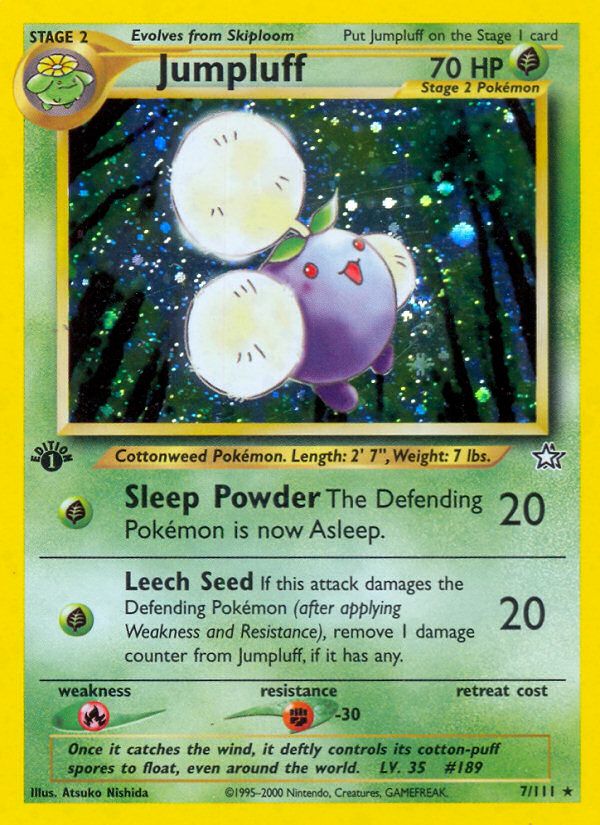
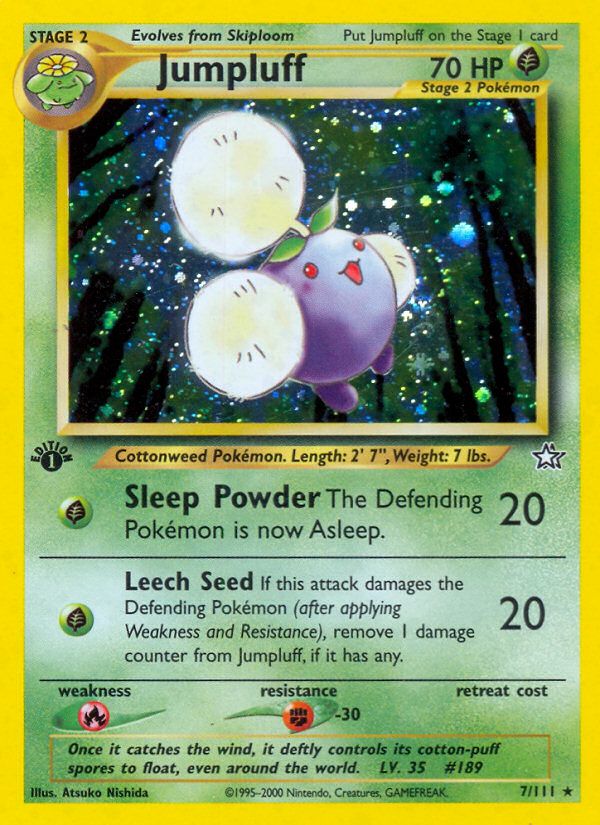
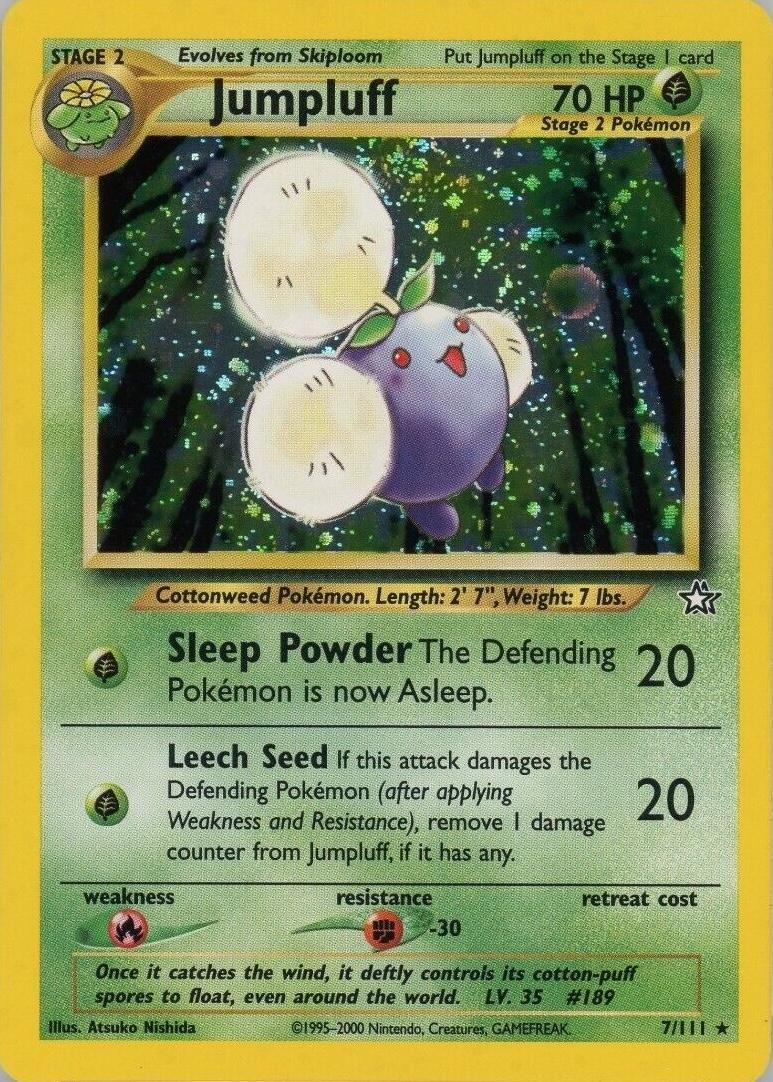
Jumpluff's English Neo Genesis holo is the foundational vintage card for most species collectors. It represents the Pokémon's earliest major English-era appearance and carries strong Johto nostalgia.
Prioritize holo surface quality and centering, as Neo holos are often scratched or edgeworn.
Estimated value: $9.92
- 2
Jumpluff PSA 10
Neo Genesis · 1999 · 189
The Japanese Neo Genesis Jumpluff is the original release and a favorite for collectors who prefer classic Japanese holo patterns and stronger print quality. It is a key companion piece to the English 7/111.
Buy the cleanest front you can find, since Japanese vintage slabs reward strong eye appeal.
Estimated value: $9.92
- 3
Dark Jumpluff PSA 10
Neo Destiny · 2002 · 9/105
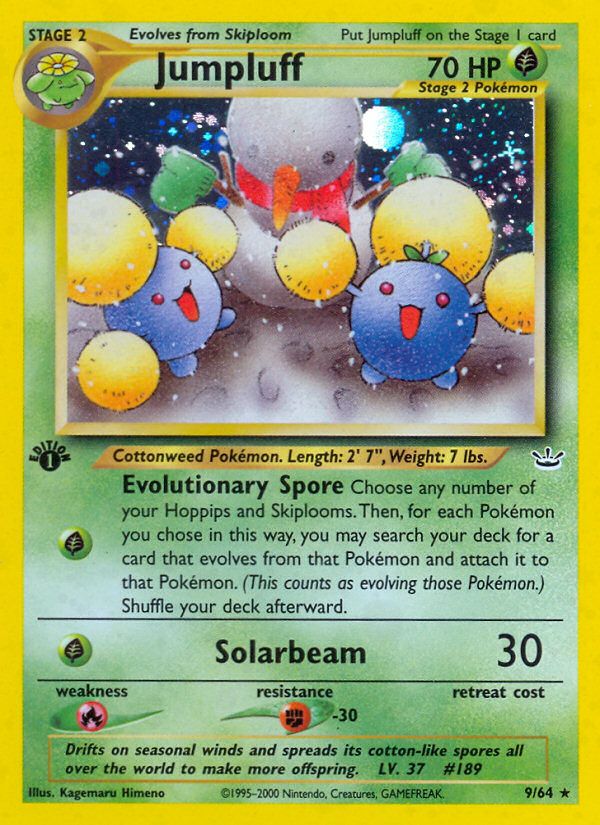
Dark Jumpluff gives the species one of its most distinctive vintage variants, tying it to the popular Dark Pokémon theme in Neo Destiny. Its unusual concept and holo treatment make it a standout slab target.
Check for print lines and silvering, which can hold back otherwise strong Neo Destiny copies.
Estimated value: $27.49
- 4
Dark Jumpluff PSA 10
Neo Destiny · 2001 · 176
The Japanese Dark Jumpluff is the original-language counterpart to the English Neo Destiny holo and an important card for complete vintage species runs. It blends niche character appeal with Japanese Neo collectibility.
If possible, pair this with the English holo for a stronger cross-language Jumpluff collection.
Estimated value: $9.92
- 5
Jumpluff PSA 10
Expedition Base Set · 2002 · 24/165
Expedition brought Jumpluff into the e-Reader era, giving the species an important bridge card between classic WotC and modern-era design. The set's loyal collector base supports long-term interest.
Gem mint Expedition cards can be tougher than they look, so inspect corners and edge chipping carefully.
- 6
Jumpluff PSA 10
Aquapolis · 2003 · 28/147
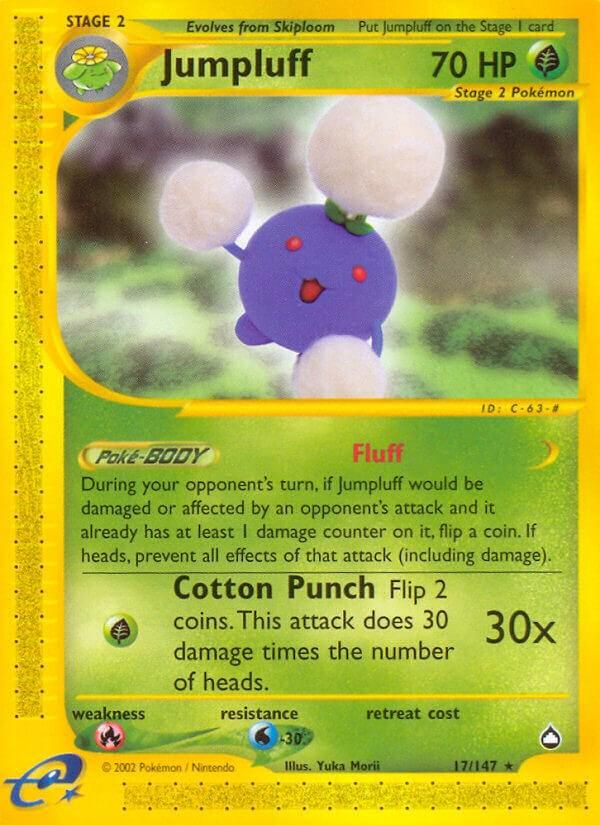
Aquapolis is one of the hobby's most respected e-Series sets, and Jumpluff's appearance here adds real prestige to a species collection. It is a strong secondary vintage target after Neo holos.
Look for crisp edges and clean gloss, as Aquapolis condition can vary widely in raw copies.
Estimated value: $22.82
- 7
Jumpluff PSA 10
Skyridge · 2003 · 13/144
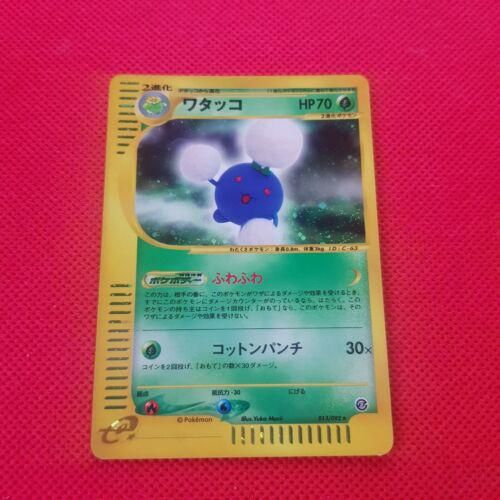
Skyridge holo Jumpluff is one of the most desirable graded cards for the species because of the set's prestige, low print run, and strong crossover demand from e-Series collectors. It is often the highest-end Jumpluff slab serious collectors pursue.
Authentic high-grade copies deserve patience; this is a card where premium condition can justify waiting.
Estimated value: $27
- 8
Jumpluff PSA 10
Skyridge · 2003 · 54/144
The non-holo Skyridge Jumpluff is an underrated part of a full species master set and complements the holo beautifully. Skyridge rarity and collector demand still make this a meaningful graded pickup.
Do not ignore non-holos in elite grade, especially from scarce e-Series sets like Skyridge.
- 9
Jumpluff PSA 10
Triumphant · 2010 · 6/102
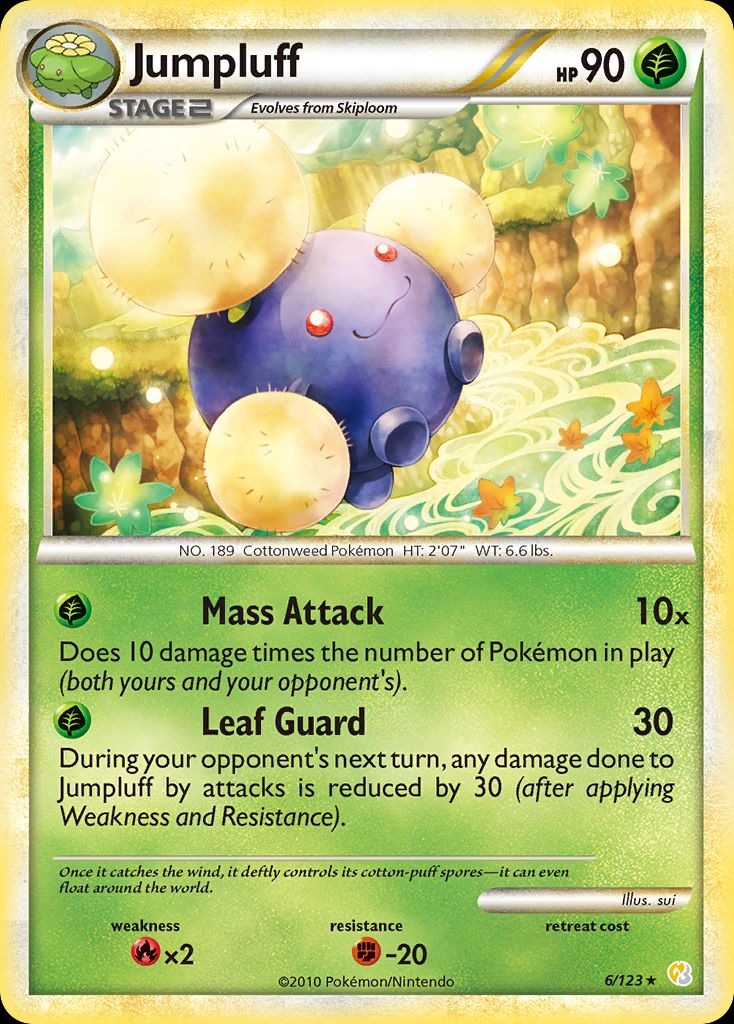
Triumphant gave Jumpluff a memorable HGSS-era holo and renewed attention from both players and Johto fans. It offers a nice midpoint between pure vintage cards and more modern species collecting.
This is a solid budget-friendly PSA 10 target for collectors who want era variety.
Estimated value: $7.24
- 10
Jumpluff PSA 10
Plasma Freeze · 2013 · 3/116
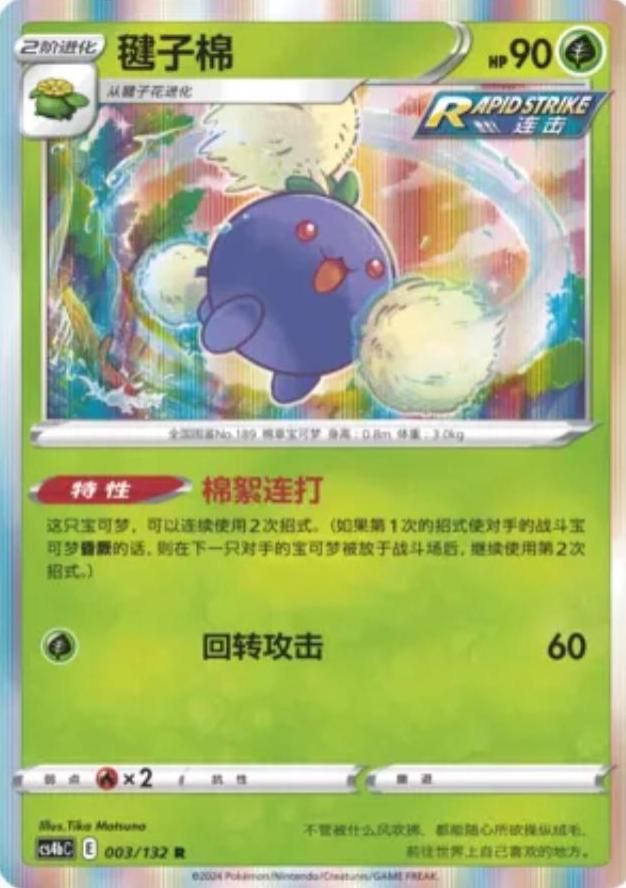
Plasma Freeze adds Black & White-era representation to a graded Jumpluff lineup and helps round out a species collection across multiple design generations. It is more subtle than the vintage holos but still relevant for completists.
Best suited for collectors building a full graded chronology rather than only chasing marquee vintage cards.
Estimated value: $1.84
Frequently asked questions
What is the rarest Jumpluff card?
Among widely recognized set cards, Skyridge holo Jumpluff is one of the toughest and most desirable because of the set's small print run and strong collector demand. Certain Japanese vintage releases can also be very difficult to source in top grades.
Is PSA 10 Jumpluff worth buying?
Yes, if you are targeting vintage Neo or e-Series cards where condition sensitivity creates a real premium for gem mint examples. PSA 10 copies generally provide stronger liquidity and clearer long-term tracking than raw cards.
How do I find Jumpluff card prices?
Check eBay sold listings for real market comps, compare with PriceCharting, and review PSA population data to understand scarcity. Slabfolio also helps you track graded card prices and organize your collection in one place.
Whether you're building your first graded Jumpluff collection or managing a larger Pokémon card portfolio, tracking real market movement matters. Slabfolio helps collectors organize slabs, monitor values, and follow graded card price changes over time.
Related guides
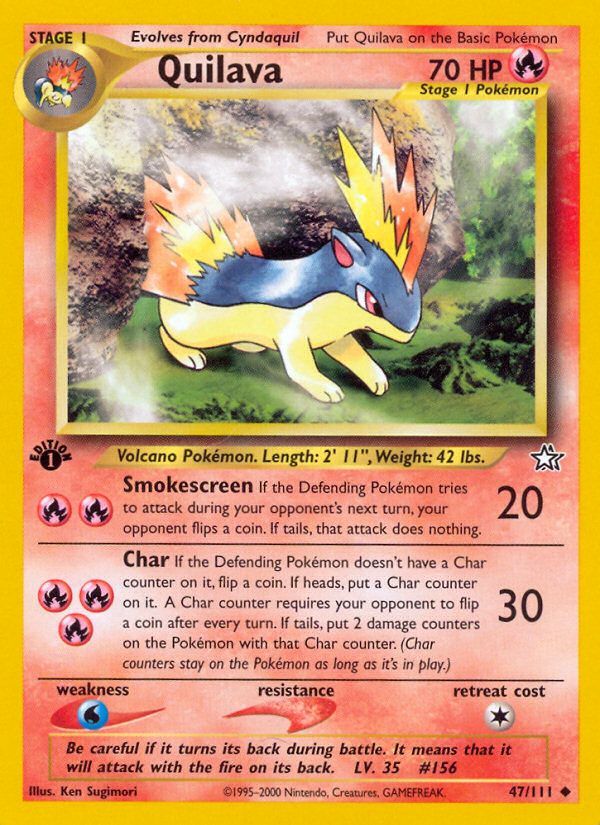
Best Graded Quilava Cards: Collector & Investor Guide
Quilava sits in a sweet spot for Johto collectors: it is a true middle-evolution favorite from the original Gold and Silver era, but it also appears far less often than headline Pokémon like Typhlosion or Cyndaquil.
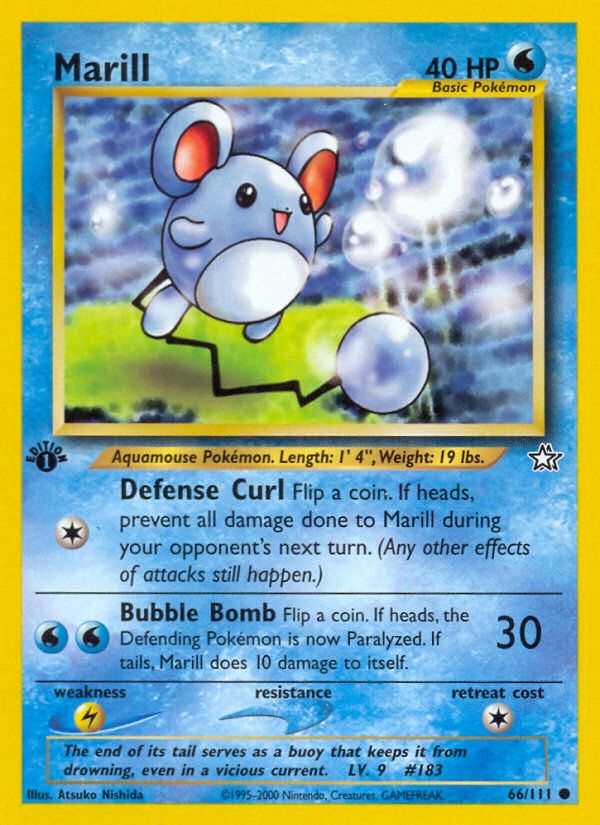
Best Graded Marill Cards: Collector & Investor Guide
Marill has been a favorite with collectors since the early Johto era, when its anime debut and distinctive round design made it one of the most memorable Pokémon of its generation.
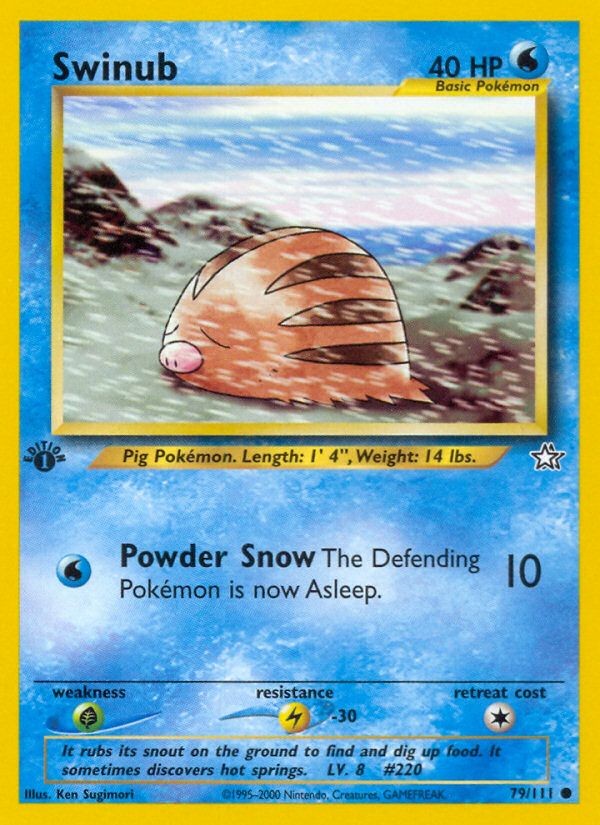
Best Graded Swinub Cards: Collector & Investor Guide
Swinub is a small Johto Pokémon, but its card history spans some of the most collectible eras in the hobby.
Best Graded Mantine Cards: Collector & Investor Guide
Mantine has never been the flashiest Johto Pokémon, but it has built a loyal following with collectors who appreciate Water-type artwork, Neo-era nostalgia, and a relatively small but interesting card checklist.
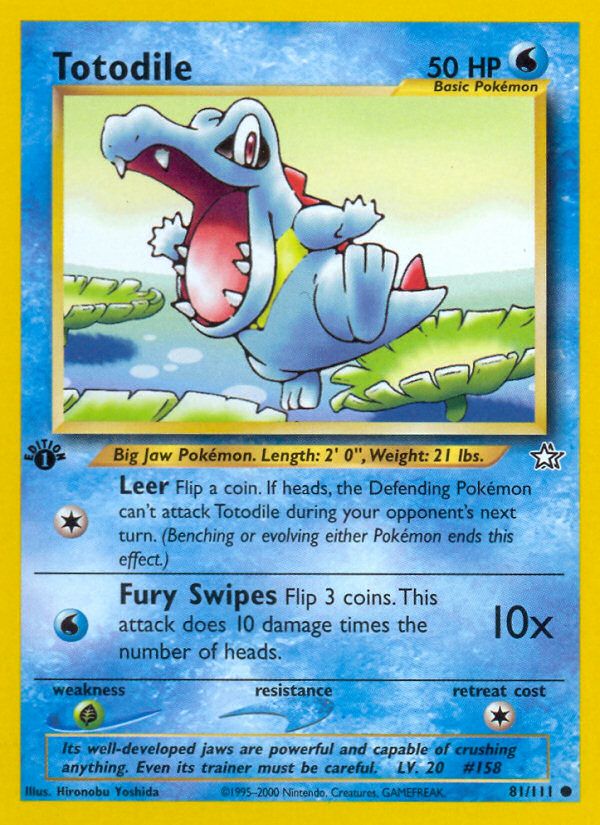
Best Graded Totodile Cards: Collector & Investor Guide
Totodile has always been one of the most beloved Johto starters, and that makes its cards especially appealing to collectors who grew up with the second generation of Pokémon.
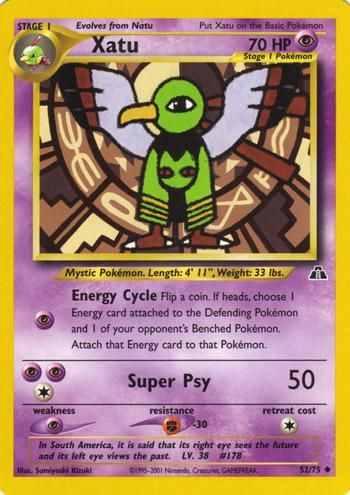
Best Graded Xatu Cards: Collector & Investor Guide
Xatu is one of those Johto Pokémon that quietly built a loyal collector base through the Neo era and beyond.