
Hippowdon
Best Graded Hippowdon Cards: Collector & Investor Guide
By Kyle Eggleston · Published May 13, 2026
Hippowdon is not a headline Pokémon in the way Charizard or Pikachu is, but that is exactly why many collectors enjoy chasing it. Its card history is concentrated in the Diamond & Pearl and Platinum eras, where sturdy Stage 1 designs, regional Pokédex favorites, and a few genuinely scarce printings give the species a niche following with strong long-term appeal. For graded collectors, Hippowdon is a smart character-focused target because condition-sensitive DP/Pt cards can be much tougher in PSA 10 than modern ultra rares. PSA, BGS, and CGC slabs help standardize condition, make population data easier to follow, and give buyers a cleaner way to compare raw copies against real market sales over time.
Why Hippowdon Cards Are Worth Collecting
Hippowdon cards appeal to a very specific kind of collector: people who enjoy Gen 4 Pokémon, underappreciated species, and the tougher print quality standards of the Diamond & Pearl and Platinum years. While Hippowdon never received a deep catalog of chase cards, the cards it did receive are concentrated in an era many collectors now view as increasingly important for both nostalgia and scarcity.
Artwork also plays a major role. Hippowdon tends to be illustrated as a massive, grounded battlefield presence, which gives its cards a distinct visual identity compared with more flashy Pokémon. For slab collectors, that identity matters: even non-holo and regular holo Hippowdon cards can become attractive pickups when the underlying set is difficult in gem mint condition.
What Makes a Graded Hippowdon Card Valuable?
- Grade (PSA 10 commands highest premiums)
- Set and era (Diamond & Pearl and Platinum cards often carry more condition sensitivity than modern issues)
- Rarity and print run
- Population report scarcity
- Recent sold comps on eBay
- Japanese vs English versions
- PSA 10 vs raw comparison
The Best Graded Hippowdon Cards to Collect
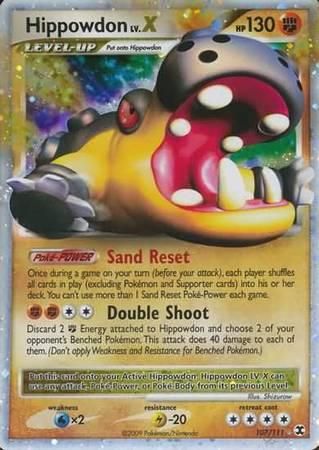
1. Hippowdon Lv.X. Rising Rivals 107/111
Hippowdon Lv.X is the clear centerpiece of the species in the English TCG. As the only Hippowdon Lv.X, it sits at the top of most collector want lists and benefits from the wider popularity of Platinum-era Lv.X cards. Even collectors who do not specialize in Hippowdon often chase species-complete Lv.X runs, which helps support demand.
For buyers, centering and edge wear are important because Rising Rivals cards can be unforgiving in top grade. English copies usually draw the most attention from set collectors, while Japanese collectors may prefer the Clash at the Summit version for cleaner print quality and lower pop visibility in Western marketplaces.
2. Hippowdon. Secret Wonders 12/132
Secret Wonders Hippowdon is one of the earliest notable English holo appearances for the Pokémon, and that alone gives it historical importance. Secret Wonders remains a respected Diamond & Pearl set, and regular holo rares from this era can be deceptively difficult to find in high grade due to scratching and edge chipping.
Collectors who enjoy building early Hippowdon timelines often start here. PSA 10 examples can be more appealing than raw because holofoil condition is not always obvious in listing photos, making graded copies a safer buy.
3. Hippowdon. Legends Awakened 33/146
Legends Awakened Hippowdon is a strong mid-era pickup for collectors trying to assemble a full English Hippowdon run. It is not the flashiest card on paper, but it comes from a popular Platinum-adjacent period where many species received memorable competitive and collector printings.
This is the kind of slab that works well for patient buyers. Raw copies are often affordable, but a true gem mint example can still be worth prioritizing because lower-profile species from older sets tend to disappear from the market for long stretches.
4. Hippowdon 4. Arceus 31/99
Arceus introduced multiple numbered forms and variants for several Pokémon, and Hippowdon 4 stands out as a fun subset target within the species catalog. Collectors who like unusual set structures often gravitate to Arceus because of the form numbering, and that gives this card more personality than a standard uncommon or rare issue.
In graded form, this card is best viewed as a niche completion piece rather than a headline investment. Still, Arceus-era cards have a loyal following, and clean PSA 10 copies can be harder to source than many collectors expect.
5. Hippowdon 4. Arceus 32/99
Hippowdon 4 from Arceus in its alternate numbered slot is another important completion card for species-focused collectors. Owning both Arceus Hippowdon entries gives a collection more depth and reflects how Pokémon organized regional and form-based variants during the late DP era.
Buyer tip: make sure card numbers are checked carefully, because Arceus can be confusing at a glance. This is exactly the kind of card where a slab label helps reduce buying mistakes and adds confidence when you are assembling a full registry-style run.
6. Hippowdon. Platinum 33/127
Platinum base set remains one of the stronger Gen 4 collector sets, and Hippowdon 33/127 benefits from that broader era recognition. It may not have the high-end cachet of Lv.X cards, but it is still part of a highly collectible time in the hobby, especially for anyone building Platinum set side collections.
English Platinum cards can show edge and corner issues straight from pack-fresh copies, so PSA 10 examples deserve more respect than the card's rarity alone might suggest. It is a good card to target if you want an era-authentic slab without stretching to the top entry-level cost of the Lv.X.
7. Hippowdon. Great Encounters 40/106
Great Encounters Hippowdon is an early English appearance that fits well in a Gen 4 species run. Great Encounters has become more appreciated over time thanks to its connection to the broader DP block and its familiar artwork style, and cards like this gain value from set-driven nostalgia even without ultra-rare status.
Collectors should watch for whitening and surface wear, especially on darker borders and backs. A PSA 10 copy can offer a better long-term display piece than a raw Near Mint card that looks fine in scans but shows flaws under light.
8. Hippowdon. Mysterious Treasures 31/123
Mysterious Treasures is one of the foundational Diamond & Pearl-era expansions, which gives Hippowdon 31/123 significance as an early-set issue. For collectors who like first-wave appearances in English blocks, this card has quiet importance despite not being flashy.
This is a smart slab target for completionists because early DP stock can be inconsistent in top condition. If your collection strategy values chronology, Mysterious Treasures is one of the better places to plant a graded flag for Hippowdon.
9. Hippowdon. Clash at the Summit 1/80
The Japanese Clash at the Summit holo is one of the most appealing niche targets for serious Hippowdon collectors. Japanese DP/Pt-era cards often have strong print quality and dedicated domestic set collectors, and this card gives you a Japanese-language counterpart to one of the species' most notable early holos.
Compared with English copies, Japanese examples can sometimes present better visually in high grade, but availability outside Japan may be sporadic. That can make a PSA 10 especially attractive for buyers who prefer easy cross-market liquidity.
10. Hippowdon LV.X. Clash at the Summit 056/080
The Japanese Hippowdon LV.X from Clash at the Summit is the species' most important Japanese card and a must-watch for advanced collectors. It combines the popularity of LV.X-era design with the appeal of a less frequently seen Japanese counterpart, making it one of the best long-term slab targets in the full Hippowdon catalog.
If you collect both languages, this is the natural companion to Rising Rivals 107/111. The English version usually gets more mainstream attention, but Japanese LV.X cards remain very compelling when population scarcity and overall eye appeal align.
Vintage vs Modern Hippowdon Cards
Hippowdon does not really have a vintage-era Wizards of the Coast presence, so its collector market is almost entirely defined by Diamond & Pearl, Platinum, and adjacent Japanese releases. That makes its earliest Gen 4 cards the closest thing to "vintage" within the species, while later printings tend to function more as affordable completion pieces than major investment anchors. For most collectors, the strongest long-term graded targets are still the earliest holos and the Lv.X in both English and Japanese.
How to Track Hippowdon Card Prices
Use eBay sold listings, PriceCharting, and PSA pop reports to gauge value. Slabfolio lets you look up graded card prices, upload your slab, and track your portfolio in one place.
FAQ
What is the rarest Hippowdon card?
For most collectors, Hippowdon Lv.X from Rising Rivals and its Japanese Clash at the Summit counterpart are the key scarcity cards to watch. They are the most important chase issues in the species catalog and usually the toughest premium slabs to source consistently.
Is PSA 10 Hippowdon worth buying?
Yes, especially for Diamond & Pearl and Platinum-era cards where gem mint copies are meaningfully tougher than many modern issues. The best buys are usually cards with clear era significance, like early holos and the Lv.X.
How do I find Hippowdon card prices?
Check eBay sold listings first, then compare with PriceCharting and PSA population data. For organized tracking, Slabfolio can help you monitor graded Hippowdon values and your collection in one place.
Prices as of Oct 21, 2026
- 1
Hippowdon Lv.X PSA 10
Rising Rivals · 2009 · 107/111
Hippowdon Lv.X is the defining English Hippowdon chase card and the species' most recognizable high-end release. It comes from the Lv.X-heavy Platinum era, which remains a favorite among collectors who focus on late-2000s Pokémon history.
Prioritize clean edges, holo surface, and centering because Platinum-era cards can be tough in true gem mint condition.
Estimated value: $58.47
- 2
Hippowdon PSA 10
Secret Wonders · 2007 · 12/132
This Secret Wonders holo is one of Hippowdon's earliest notable English cards and a key pickup for collectors building a chronological species run. DP-era holo rares have developed a stronger following as condition-sensitive set cards become harder to source.
Watch for holo scratching and back-edge whitening, which are common on raw DP holos.
- 3
Hippowdon PSA 10
Legends Awakened · 2008 · 33/146
Legends Awakened Hippowdon adds another important English DP/Pt-era stop in the species checklist. It is a quieter card, but collectors who appreciate complete runs often need time to find top-grade copies because supply can be thin.
This is a good card to buy already graded if you want certainty on condition and long-term set consistency.
- 4
Hippowdon 4 PSA 10
Arceus · 2009 · 31/99
Arceus gave collectors form-numbered cards that still stand out visually and structurally within the late DP era. Hippowdon 4 is a memorable subset-style release that adds depth beyond standard species collecting.
Double-check the exact card number because Arceus numbering can be confusing when buying loose copies.
- 5
Hippowdon 4 PSA 10
Arceus · 2009 · 32/99
This companion Arceus Hippowdon is an essential partner piece to 31/99 for complete species-focused collections. The dual-numbered Hippowdon entries from Arceus give the Pokémon a more interesting catalog than many contemporaries received.
If you collect registry-style runs, owning both Arceus numbers in the same grade makes the set display much stronger.
- 6
Hippowdon PSA 10
Platinum · 2009 · 33/127
Platinum base set remains one of the more recognizable Gen 4 expansions, giving Hippowdon 33/127 solid era appeal. It is a dependable species card for collectors who want representation from the set without paying Lv.X prices.
Look for crisp corners and strong centering, since Platinum print quality can be inconsistent.
- 7
Hippowdon PSA 10
Great Encounters · 2008 · 40/106
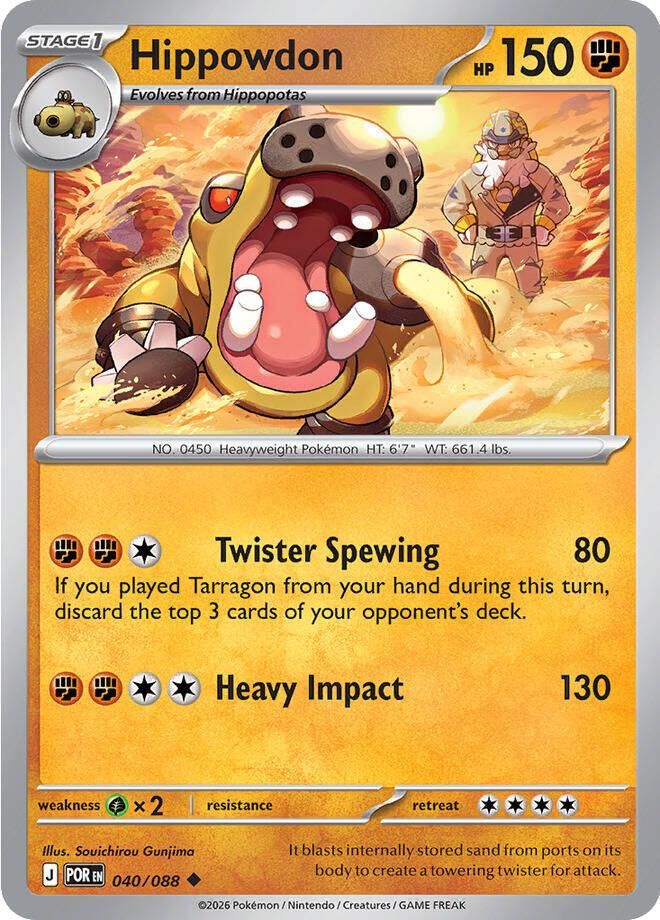
Great Encounters Hippowdon is an early Diamond & Pearl-era appearance that fits naturally into any full English run. Its appeal is tied to set nostalgia and the growing collector interest in mid-DP rares that are cleaner in slabs than raw listings often suggest.
This is a nice lower-cost PSA 10 target for collectors building across the whole DP block.
Estimated value: $0.11
- 8
Hippowdon PSA 10
Mysterious Treasures · 2007 · 31/123
As part of one of the earliest main Diamond & Pearl expansions, Mysterious Treasures Hippowdon has chronological significance for the species in English. It is a foundational card for collectors who value first-wave Gen 4 appearances.
Buy the best eye appeal you can find, since early DP cards often show wear more easily than modern releases.
- 9
Hippowdon PSA 10
Clash at the Summit · 2008 · 1/80
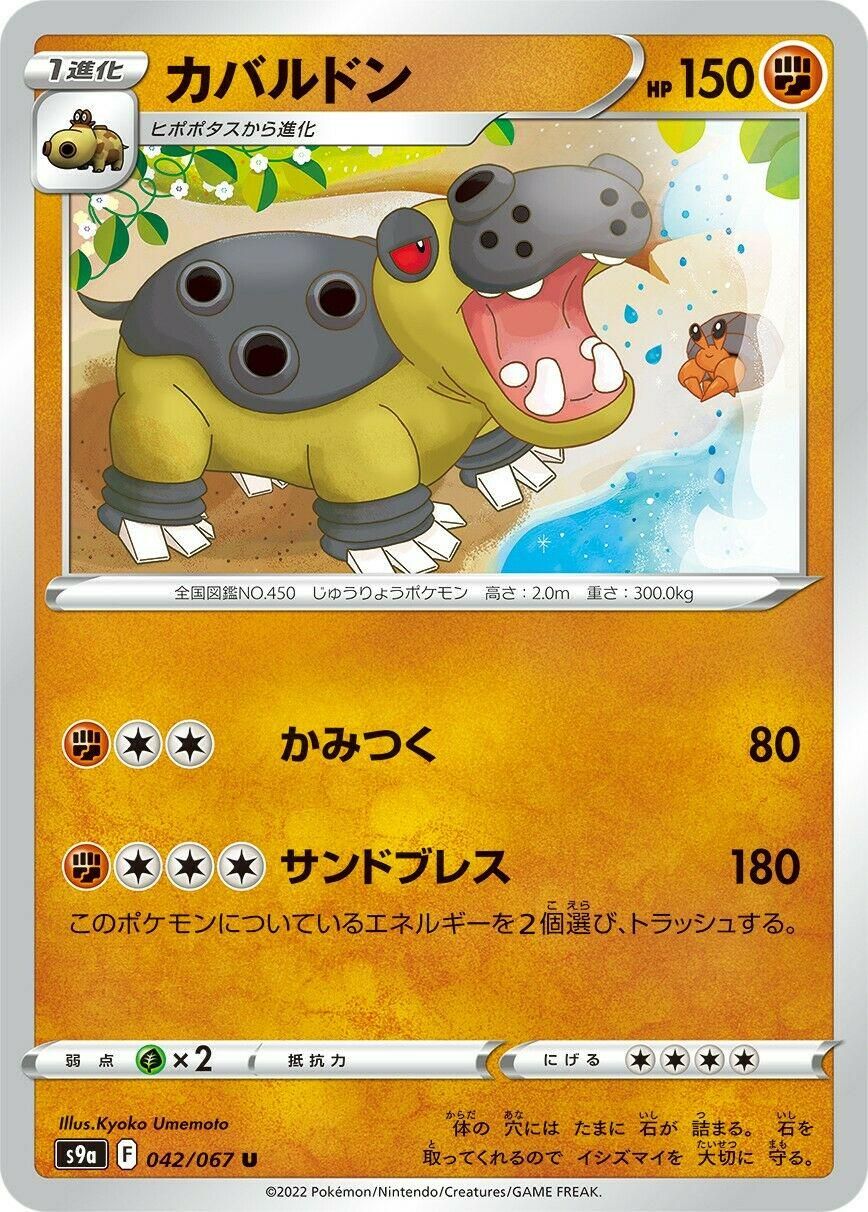
This Japanese holo from Clash at the Summit is one of the better niche pickups for advanced Hippowdon collectors. Japanese DP/Pt-era cards combine strong visual presentation with a market that can be less saturated than the English side.
Japanese holos often look excellent in hand, but verify the exact set and numbering because overseas listings can vary in formatting.
Estimated value: $1.52
- 10
Hippowdon LV.X PSA 10
Clash at the Summit · 2008 · 056/080
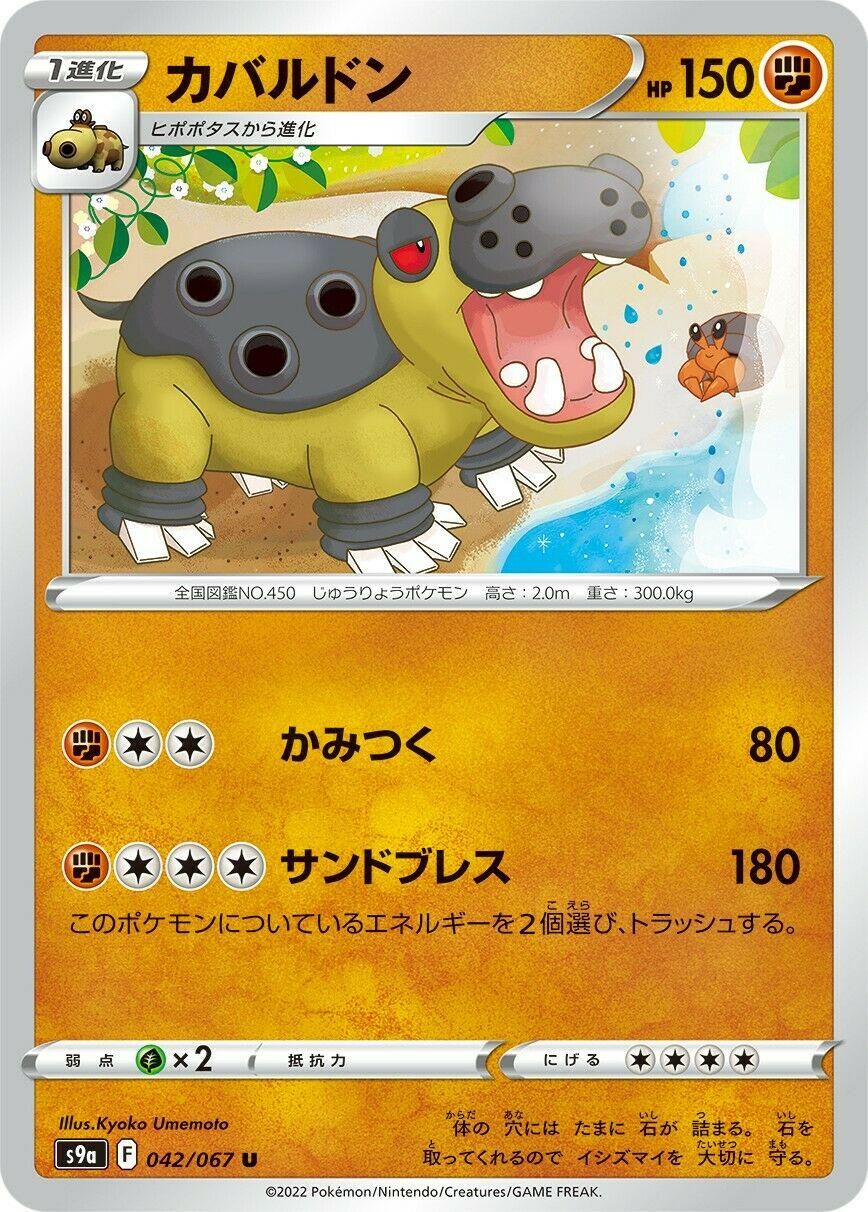
The Japanese Hippowdon LV.X is the species' most important non-English card and a major companion piece to Rising Rivals 107/111. It offers all the appeal of the Lv.X era with the added edge of Japanese exclusivity within many Western collections.
If you collect both languages, pairing this with the English Lv.X creates the strongest two-card graded Hippowdon centerpiece.
Estimated value: $1.52
Frequently asked questions
What is the rarest Hippowdon card?
For most collectors, Hippowdon Lv.X from Rising Rivals and its Japanese Clash at the Summit counterpart are the key scarcity cards to watch. They are the most important chase issues in the species catalog and usually the toughest premium slabs to source consistently.
Is PSA 10 Hippowdon worth buying?
Yes, especially for Diamond & Pearl and Platinum-era cards where gem mint copies are meaningfully tougher than many modern issues. The best buys are usually cards with clear era significance, like early holos and the Lv.X.
How do I find Hippowdon card prices?
Check eBay sold listings first, then compare with PriceCharting and PSA population data. For organized tracking, Slabfolio can help you monitor graded Hippowdon values and your collection in one place.
Whether you're building your first graded Hippowdon collection or managing a larger Pokémon card portfolio, tracking real market movement matters. Slabfolio helps collectors organize slabs, monitor values, and follow graded card price changes over time.
Related guides
Best Graded Buizel Cards: Collector & Investor Guide
Buizel is one of the most recognizable Water-type Pokémon introduced in the Diamond & Pearl era, and its cards appeal to collectors who enjoy Sinnoh nostalgia, cheerful artwork, and affordable character-focused runs.
Best Graded Bibarel Cards: Collector & Investor Guide
Bibarel is not a traditional blue-chip Pokémon, but it has become a surprisingly fun niche for collectors thanks to its long run of playable cards, early Diamond & Pearl appearances, and memorable modern art.
Best Graded Luxio Cards: Collector & Investor Guide
Luxio sits in an interesting spot for Pokémon TCG collectors.
Best Graded Budew Cards: Collector & Investor Guide
Budew is a small Baby Pokémon, but it has a surprisingly focused niche within the Pokémon TCG.
Best Graded Drifloon Cards: Collector & Investor Guide
Drifloon is one of those Sinnoh-era Pokémon that has built a quiet but loyal collector base.
Best Graded Skorupi Cards: Collector & Investor Guide
Skorupi is not a headline Pokémon in the way Charizard or Pikachu is, but that is exactly why it appeals to focused species collectors.