
Hippopotas
Best Graded Hippopotas Cards: Collector & Investor Guide
By Kyle Eggleston · Published May 13, 2026
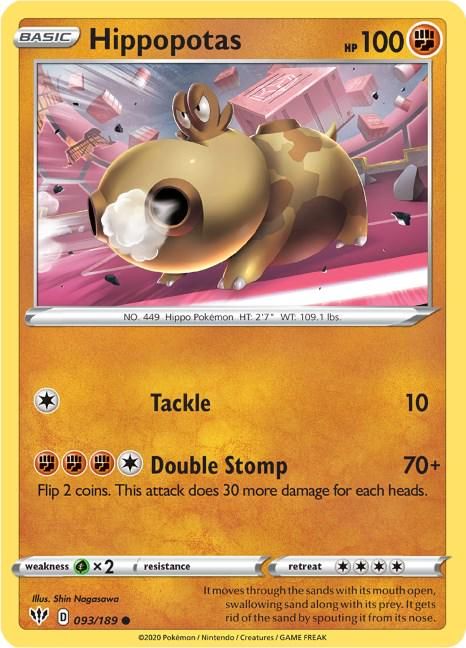
Hippopotas is not a headline chase Pokémon, but that is exactly why it has a loyal niche among character collectors and Diamond & Pearl era fans. Its cards tend to feature grounded, natural artwork, and many appeared during one of the most collectible periods for modern vintage-style Pokémon cards: the late DP and Platinum years. For graded collectors, Hippopotas offers an appealing mix of low-cost entry points, tougher condition-sensitive commons, and a modest spread across English and Japanese releases. PSA, BGS, and CGC slabs matter here because seemingly simple cards can become surprisingly scarce in gem mint condition, especially when older pack-fresh copies show edge wear, print lines, or centering issues.
Why Hippopotas Cards Are Worth Collecting
Hippopotas cards appeal to a different kind of Pokémon collector. Rather than chasing trophy-level rarity, many buyers are drawn to species collections, DP-era nostalgia, and artwork that captures Sinnoh's more natural and earthy Pokémon. Hippopotas fits especially well into binder sets and graded mini-runs built around Ground-type Pokémon or early Gen 4 releases.
Another reason Hippopotas is worth collecting is that its card history spans multiple eras without becoming overprinted in high-end chase slots. That means collectors can pursue English and Japanese copies, compare artwork variations, and target gem mint slabs where population scarcity can matter more than raw card hype.
What Makes a Graded Hippopotas Card Valuable?
- Grade (PSA 10 commands highest premiums)
- Set and era (vintage vs modern sets)
- Rarity and print run
- Population report scarcity
- Recent sold comps on eBay
- Japanese vs English versions
- PSA 10 vs raw comparison
The Best Graded Hippopotas Cards to Collect
1. Hippopotas. Mysterious Treasures 76/123
This is one of the key English Hippopotas cards because it comes from the Diamond & Pearl era, when condition sensitivity often makes true gem mint copies harder than many collectors expect. For species collectors, it is one of the foundational English Hippopotas appearances and an essential slab if you want a representative early Sinnoh card.
In PSA 10, value tends to come more from scarcity and era appeal than from raw rarity. English demand is usually stronger for registry-style collectors, while Japanese-era equivalents can appeal to artwork-focused buyers who want cleaner printing and often sharper presentation.
2. Hippopotas. Secret Wonders 107/132
Secret Wonders is a popular DP expansion with broad nostalgic appeal, and Hippopotas 107/132 is a strong collector target for anyone building a graded Sinnoh Pokémon run. It is still a common card in set hierarchy terms, but sealed DP commons often show edge wear and surface issues, which gives high-grade slabs more appeal.
Collectors should compare centering and corner wear carefully before buying raw. PSA 10 examples can outperform expectations simply because many surviving copies were never preserved to modern grading standards.
3. Hippopotas. Legends Awakened 93/146
Legends Awakened is one of the more collectible late DP-era sets, and Hippopotas 93/146 benefits from that broader set prestige. Even though it is not a chase holo, the set name alone adds collector credibility, especially for those assembling graded species runs from major Sinnoh-era expansions.
Japanese counterparts may offer a more affordable route for display collectors, but English Legends Awakened cards often carry stronger nostalgia among PSA-focused buyers. Prioritize clean surfaces, as even commons from this era can show scratches or print defects.
4. Hippopotas. Stormfront 67/100
Stormfront remains one of the standout late Diamond & Pearl sets, and Hippopotas 67/100 is a logical pick for collectors who want a stronger set association. Cards from this release benefit from the set's reputation, and that can help even non-holo species cards maintain interest in graded form.
For slab buyers, this is a good example of a card where set popularity helps support value more than the individual Pokémon's market profile. If you are choosing between raw and graded, inspect centering and whitening closely because Stormfront copies can be deceptively tough in mint condition.
5. Hippopotas. Arceus 61/99
Arceus is one of the most recognizable late Platinum-era sets, and Hippopotas 61/99 fits nicely into graded collections centered on the close of the DP/Pt period. The card is not flashy, but it has strong era relevance and is often pursued by collectors who prefer complete species runs across all English appearances.
Because Arceus remains a popular set to revisit, PSA 10 copies can carry stronger collector interest than raw commons would suggest. Japanese cards from adjacent era releases may look cleaner, but English set collectors often prefer matching set-label continuity in slabs.
6. Hippopotas. HeartGold & SoulSilver 62/123
This card marks Hippopotas entering the HGSS block, giving collectors an important bridge between Sinnoh-focused DP cards and the clean silver-border-era design direction of HeartGold & SoulSilver. It is a useful slab for collectors who want to show the Pokémon's progression across major eras rather than just stacking DP commons.
HGSS cards can be attractive in top grades because print quality is generally strong, but gem mint examples still depend on clean corners and strong centering. It is usually a better collector buy as part of a broader era run than as a standalone speculation piece.
7. Hippopotas. Triumphant 66/102
Triumphant is a respected HGSS-era set, and Hippopotas 66/102 stands out because it comes from a smaller, more focused release that many set collectors still appreciate today. As with many commons from mid-era sets, the interest here is less about rarity and more about completing a polished graded species lineup.
Collectors comparing English and Japanese options should decide whether they value set familiarity or print aesthetics more. For English PSA buyers, this is one of the better HGSS Hippopotas cards to add for era balance.
8. Hippopotas. Boundaries Crossed 85/149
Boundaries Crossed gives Hippopotas a Black & White era appearance, making this card important for collectors building a full graded chronology. It is not from Hippopotas's debut era, but that later placement actually helps because it broadens the collecting story beyond just DP nostalgia.
In graded form, this is often a lower-cost entry point, but that can be a strength for collectors who want a clean PSA 10 run without overpaying. Focus on condition and label consistency if you are building a display set across multiple eras.
9. Hippopotas. Flashfire 54/106
Flashfire is better known for bigger-name chase cards, which can leave smaller Pokémon like Hippopotas overlooked. That makes 54/106 an interesting graded target for species collectors, especially if you enjoy assembling underappreciated cards from otherwise high-profile expansions.
PSA 10 copies can be appealing because many buyers simply never think to grade cards like this, which can limit supply. Japanese alternatives may offer sharper finish quality, but English collectors often value the recognizable XY-era set branding.
10. Hippopotas. Sun & Moon 72/149
Sun & Moon 72/149 is one of the cleaner modern-era Hippopotas cards and an accessible choice for collectors who want at least one contemporary slab in a species run. While it lacks the age premium of DP and HGSS cards, it can still matter as a top-grade condition piece, especially for registry-style collectors.
Modern PSA 10 copies are usually easier to source than older cards, so this is often a practical buy rather than a scarcity play. It works best as a finishing touch that rounds out Hippopotas's TCG timeline.
Vintage vs Modern Hippopotas Cards
Hippopotas does not have true vintage WotC-era cards, so its earliest Diamond & Pearl releases function as its key legacy pieces for collectors. Those older English cards generally offer stronger nostalgia, lower-grade availability, and more condition scarcity, while modern cards from BW, XY, and Sun & Moon tend to be easier to source in high grade. As investment vehicles, early DP and Platinum-era slabs usually have the stronger long-term collector story, while modern copies are better for affordable set completion and clean display value.
How to Track Hippopotas Card Prices
Use eBay sold listings, PriceCharting, and PSA pop reports to gauge value. Slabfolio lets you look up graded card prices, upload your slab, and track your portfolio in one place.
FAQ
What is the rarest Hippopotas card?
Among English releases, the toughest Hippopotas cards in top grade are usually early Diamond & Pearl and Platinum-era commons because far fewer were preserved perfectly. Scarcity in PSA 10 can matter more than the card's printed rarity.
Is PSA 10 Hippopotas worth buying?
Yes, if you collect Sinnoh Pokémon, species runs, or underappreciated DP-era cards. PSA 10 examples can offer a strong balance of affordability, condition scarcity, and long-term collector appeal.
How do I find Hippopotas card prices?
Check eBay sold listings for real market comps, compare with PriceCharting where available, and review PSA population data to understand supply. Slabfolio is useful for tracking your own graded purchases over time.
Prices as of Oct 21, 2026
- 1
Hippopotas PSA 10
Mysterious Treasures · 2007 · 76/123
This is one of Hippopotas's earliest English TCG appearances, released during the Diamond & Pearl era. It is a foundational card for species collectors and a key target in high grade because older commons are often tougher to find pristine than they look.
Look for clean back edges and strong centering, since DP commons often show whitening straight from packs.
- 2
Hippopotas PSA 10
Secret Wonders · 2007 · 107/132
Secret Wonders is a well-remembered DP set, and this Hippopotas extends the species' early Sinnoh-era run. It appeals to collectors building complete English Hippopotas sequences across the major Diamond & Pearl expansions.
Prioritize surface quality, because light scratching and print issues can keep older commons out of PSA 10 holders.
- 3
Hippopotas PSA 10
Legends Awakened · 2008 · 93/146
Legends Awakened has lasting appeal among late DP collectors, giving this card stronger set context than a typical common. In graded form, it fits well into Sinnoh species collections and DP-era slab runs.
If you collect by era, this is one of the more attractive late-DP Hippopotas slabs to pair with Stormfront and Arceus.
Estimated value: $0.04
- 4
Hippopotas PSA 10
Stormfront · 2008 · 67/100
Stormfront is a standout set from the end of the Diamond & Pearl block, and that reputation helps this Hippopotas remain relevant to collectors. While not a rare card by print designation, top-grade examples benefit from set prestige and age.
Stormfront cards can hide edge wear, so ask for detailed back photos before buying raw for grading.
- 5
Hippopotas PSA 10
Arceus · 2009 · 61/99
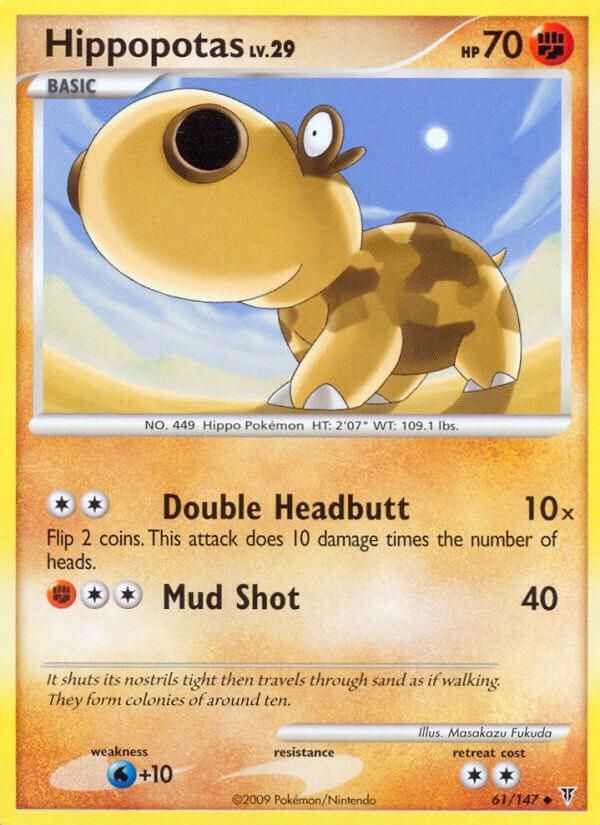
Released near the close of the Platinum era, Hippopotas 61/99 is a strong bookend card for collectors focused on Gen 4. Arceus remains a recognizable expansion, which gives the card a bit more collector gravity than a generic common appearance.
This is a smart pickup for anyone trying to complete a full English DP/Pt Hippopotas slab run.
Estimated value: $1.22
- 6
Hippopotas PSA 10
HeartGold & SoulSilver · 2010 · 62/123
This release brought Hippopotas into the HGSS block, giving species collectors an important cross-era card. Its cleaner HGSS-era layout also appeals to slab collectors who like chronological displays spanning multiple design generations.
Buy the best-centered copy you can find, since strong eye appeal matters more on simpler common cards.
- 7
Hippopotas PSA 10
Triumphant · 2010 · 66/102
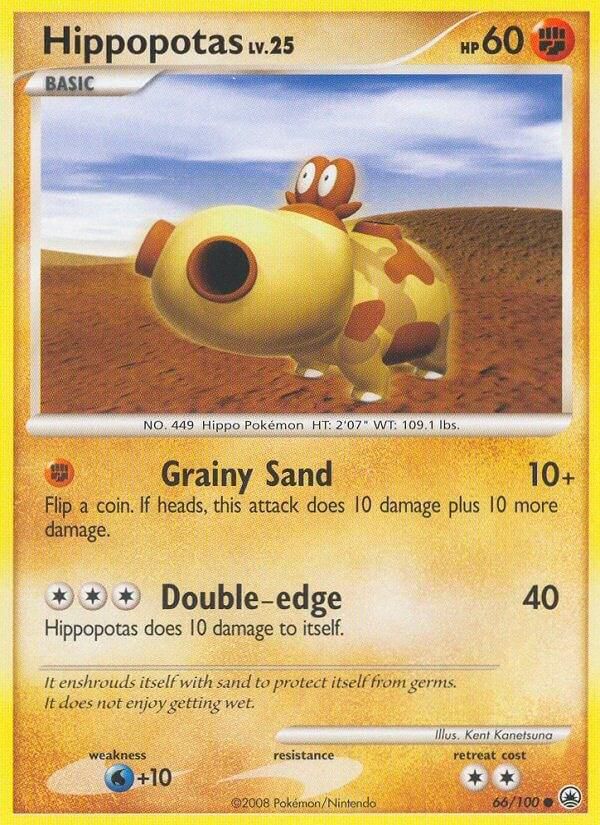
Triumphant is a respected HGSS-era set, and this Hippopotas adds depth beyond the Pokémon's DP roots. It is especially appealing for collectors building a complete graded English timeline for the species.
This card works best as part of an HGSS mini-run rather than as a standalone buy.
Estimated value: $1.06
- 8
Hippopotas PSA 10
Boundaries Crossed · 2012 · 85/149
Boundaries Crossed gives Hippopotas a Black & White era card, broadening the species' collectible timeline. It tends to be overlooked, which can make graded copies appealing for collectors who enjoy under-the-radar set additions.
Use this as an affordable PSA 10 target if older DP-era slabs are priced above your budget.
- 9
Hippopotas PSA 10
Flashfire · 2014 · 54/106
Appearing in the XY era, Hippopotas 54/106 is a nice contrast piece in a long-term species collection. Flashfire is a recognizable set, and that wider collector awareness can help support interest even for smaller Pokémon appearances.
If you like multi-era displays, this card pairs well visually with Boundaries Crossed and Sun & Moon.
Estimated value: $2.32
- 10
Hippopotas PSA 10
Sun & Moon · 2017 · 72/149
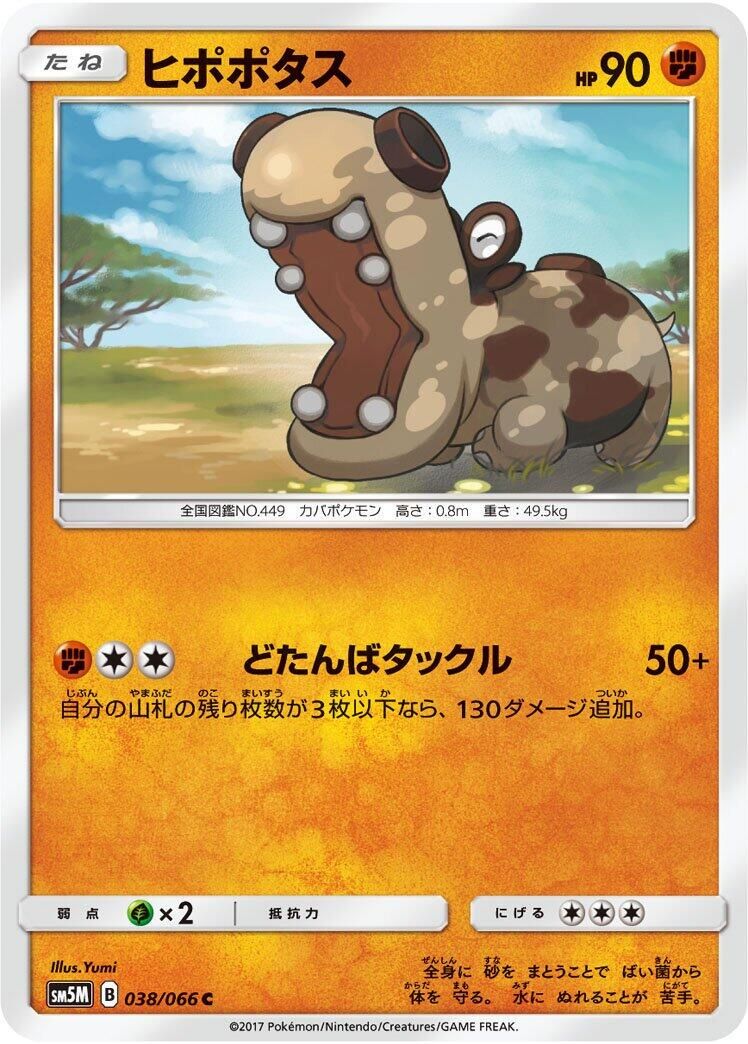
This modern-era Hippopotas is a practical finishing piece for collectors assembling a full graded run. While it lacks the scarcity narrative of early DP cards, it remains useful as a clean, accessible slab from the Sun & Moon base set.
Modern gem mint copies are usually easier to source, so be patient and buy for eye appeal rather than urgency.
Estimated value: $2.49
Frequently asked questions
What is the rarest Hippopotas card?
Among English releases, the toughest Hippopotas cards in top grade are usually early Diamond & Pearl and Platinum-era commons because far fewer were preserved perfectly. Scarcity in PSA 10 can matter more than the card's printed rarity.
Is PSA 10 Hippopotas worth buying?
Yes, if you collect Sinnoh Pokémon, species runs, or underappreciated DP-era cards. PSA 10 examples can offer a strong balance of affordability, condition scarcity, and long-term collector appeal.
How do I find Hippopotas card prices?
Check eBay sold listings for real market comps, compare with PriceCharting where available, and review PSA population data to understand supply. Slabfolio is useful for tracking your own graded purchases over time.
Whether you're building your first graded Hippopotas collection or managing a larger Pokémon card portfolio, tracking real market movement matters. Slabfolio helps collectors organize slabs, monitor values, and follow graded card price changes over time.
Related guides
Best Graded Buizel Cards: Collector & Investor Guide
Buizel is one of the most recognizable Water-type Pokémon introduced in the Diamond & Pearl era, and its cards appeal to collectors who enjoy Sinnoh nostalgia, cheerful artwork, and affordable character-focused runs.
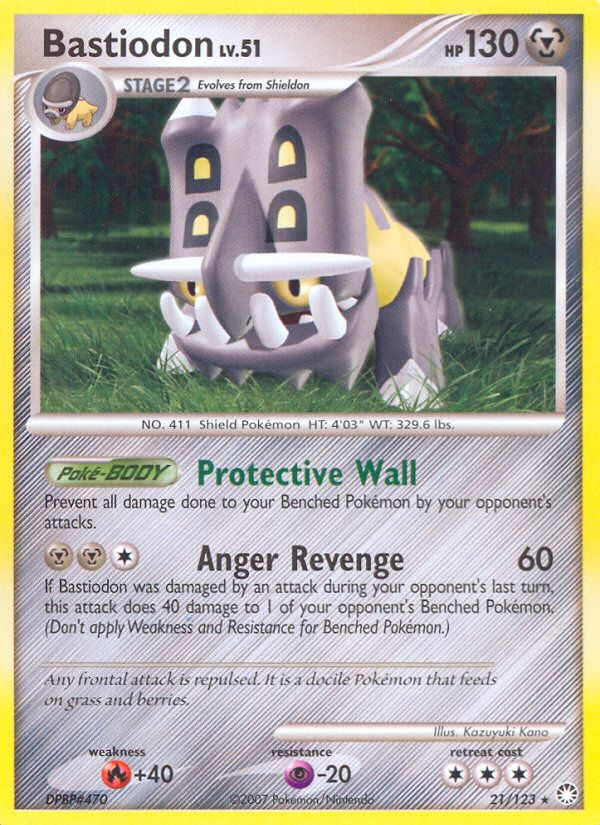
Best Graded Bastiodon Cards: Collector & Investor Guide
Bastiodon has never been the flashiest Sinnoh Pokémon, but that is part of its appeal to seasoned collectors.
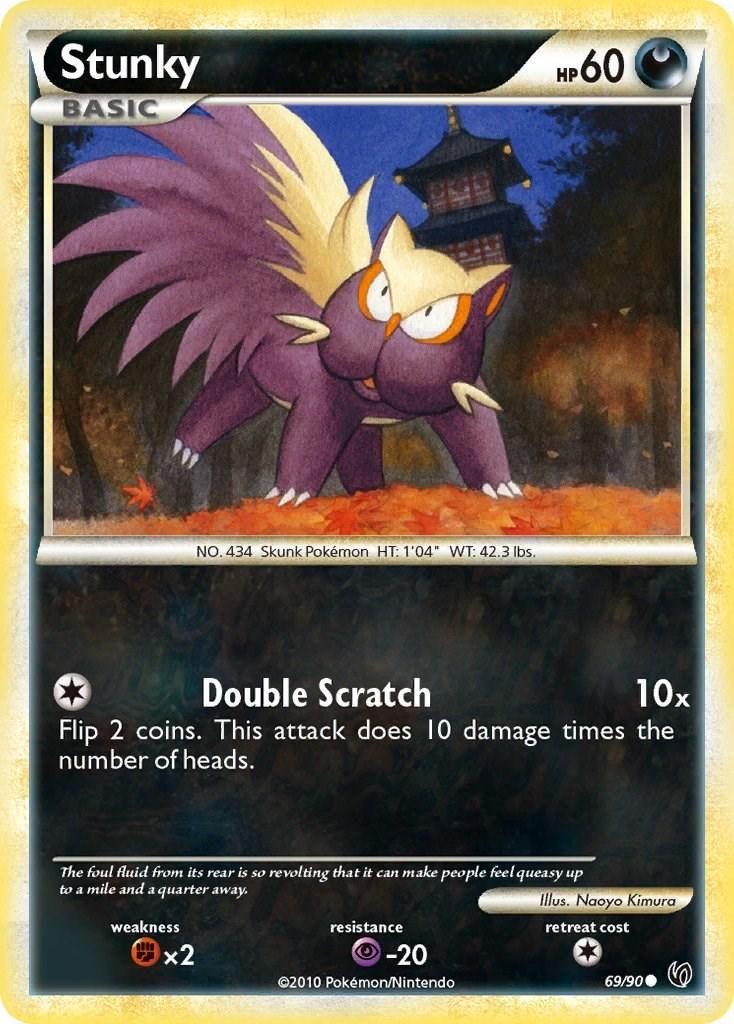
Best Graded Stunky Cards: Collector & Investor Guide
Stunky is not a headline Pokémon in the hobby, but that is exactly why its best cards appeal to focused collectors.
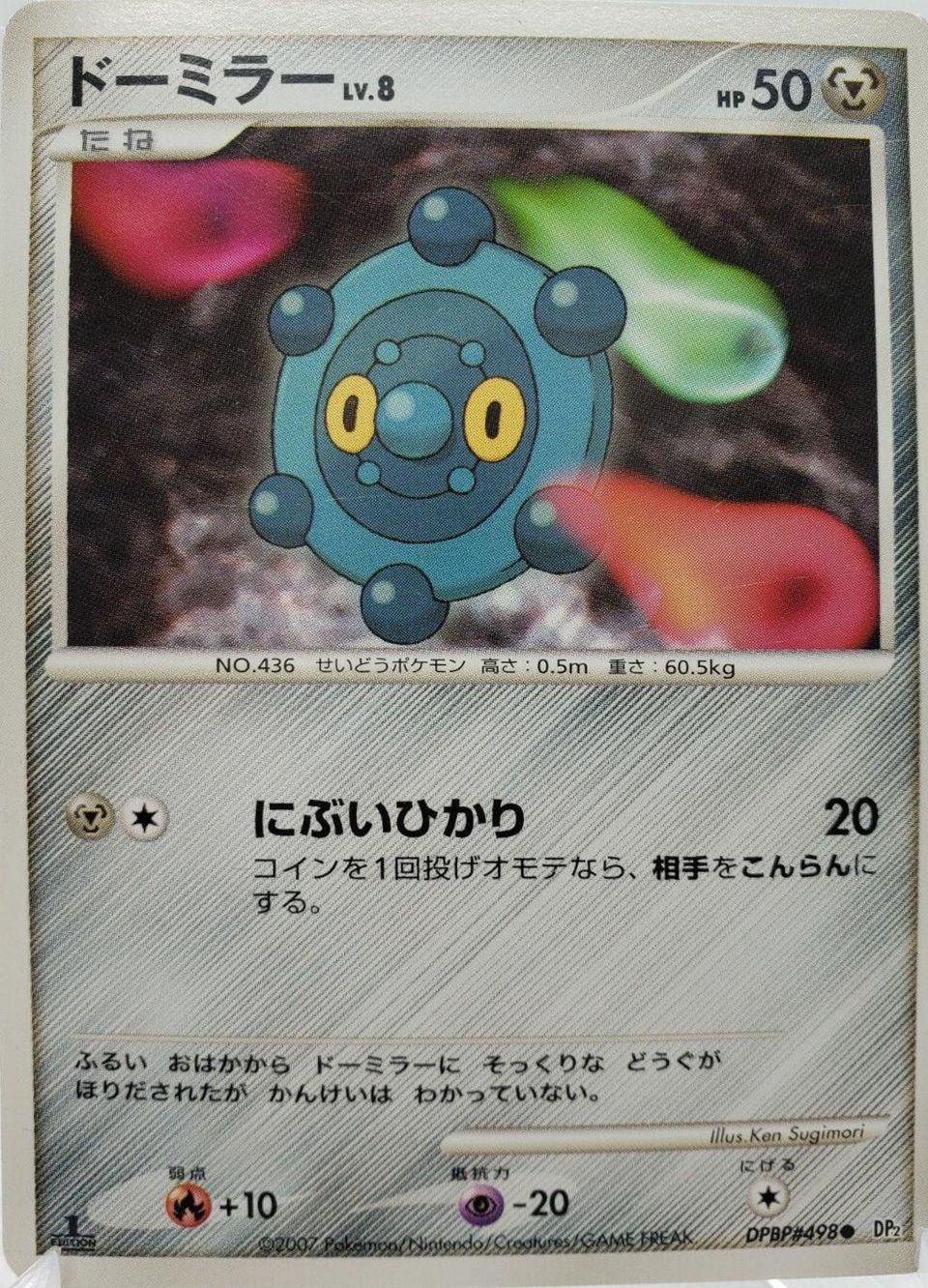
Best Graded Bronzor Cards: Collector & Investor Guide
Bronzor is a niche collector favorite from the Diamond & Pearl era, a period many Pokémon TCG fans now revisit for its distinct artwork, mechanical themes, and relatively lower print runs compared with later modern sets.
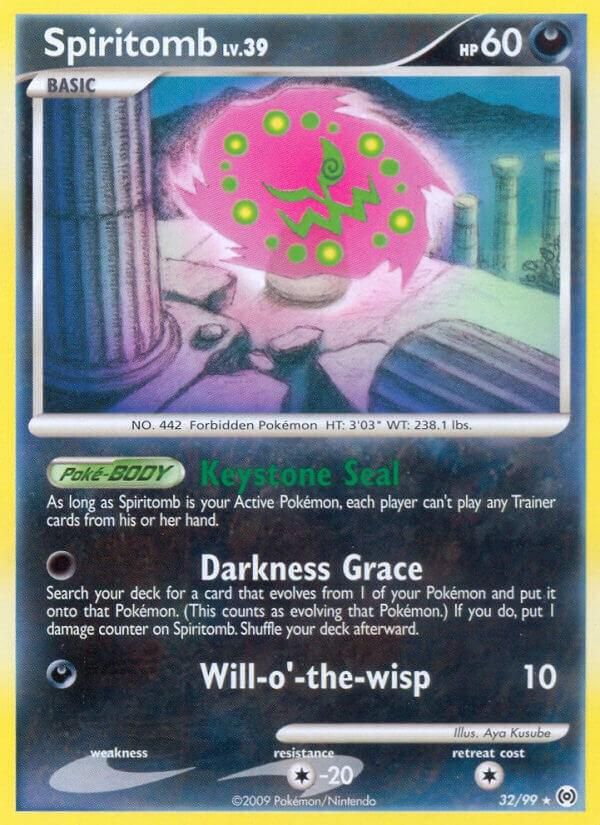
Best Graded Spiritomb Cards: Collector & Investor Guide
Spiritomb has a unique place in the Pokémon TCG.
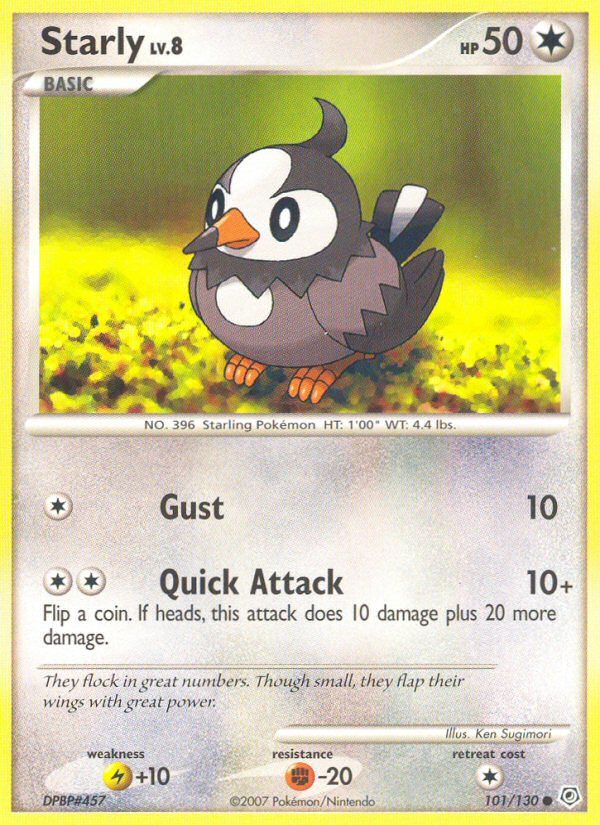
Best Graded Starly Cards: Collector & Investor Guide
Starly is one of the defining common Pokémon of the Diamond & Pearl era, making it a quietly important target for collectors who appreciate early Sinnoh nostalgia.