
Mawile
Best Graded Mawile Cards: Collector & Investor Guide
By Kyle Eggleston · Published May 13, 2026
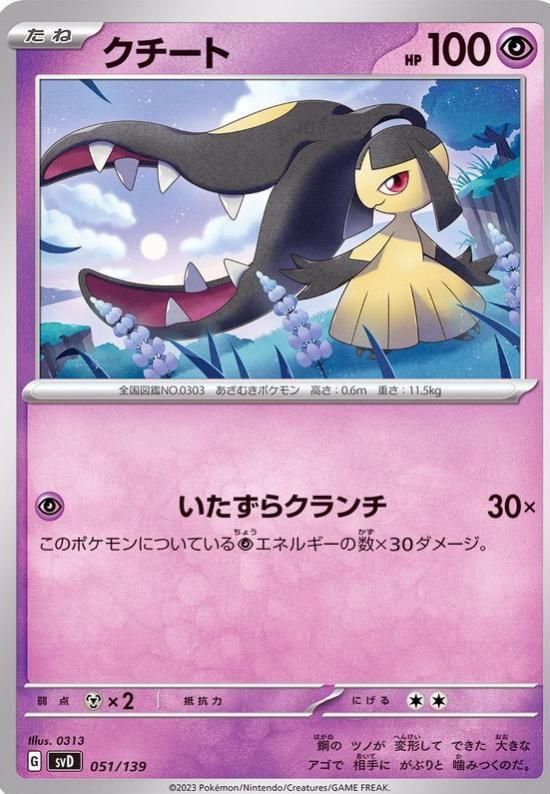
Mawile has never been the most obvious Pokémon TCG chase character, but that is exactly why it appeals to a certain kind of collector. Its card history stretches from the EX era into modern Sword & Shield releases, giving collectors a mix of nostalgic early printings, stylish full arts, and lower-pop niche slabs that stand out in specialized collections. For graded buyers, Mawile is especially interesting because condition sensitivity can matter more than raw hype. Early EX-era holos and Japanese prints can be tricky in gem mint, while modern ultra rares bring artwork-driven demand. PSA, BGS, and CGC slabs help collectors compare true condition, track population scarcity, and follow real market movement over time.
Why Mawile Cards Are Worth Collecting
Mawile cards sit in a sweet spot for collectors who like recognizable Pokémon without paying the extreme premiums attached to the hobby's biggest names. Its design has translated well across eras, from understated EX-series holo cards to modern textured ultra rares, and that gives collectors multiple entry points depending on budget and taste.
There is also real appeal in building a focused Mawile run. The species has enough notable cards to make a graded collection feel curated, but it is still niche enough that many slabs remain under the radar compared with Charizard-tier cards. That combination of nostalgia, artwork variety, and relative affordability makes Mawile a rewarding character chase.
What Makes a Graded Mawile Card Valuable?
- Grade (PSA 10 commands highest premiums)
- Set and era (vintage vs modern sets)
- Rarity and print run
- Population report scarcity
- Recent sold comps on eBay
- Japanese vs English versions
- PSA 10 vs raw comparison
The Best Graded Mawile Cards to Collect
1. Mawile 8/107 (EX Deoxys)
EX Deoxys is the single most important English-era Mawile card for many collectors because it comes from a highly respected EX set and carries the scarcer early-2000s holo appeal that slab collectors chase. Even though Mawile is not the headline Pokémon of the set, this card benefits from the broader demand that EX Deoxys receives from advanced collectors.
In PSA 10, the card becomes much more interesting because EX-era holos often show print lines, edge wear, and surface flaws. English copies tend to draw the most attention internationally, but Japanese ADV/PCG Mawile cards can offer a different scarcity profile for collectors who like lower-visibility targets.
2. Mawile 7/106 (EX Emerald)
Mawile from EX Emerald is another strong EX-era pick, especially for collectors who want a clean holo from a set that sits a bit below the top-tier EX names but still has real nostalgia. It is a classic example of a card that can be easy to overlook in raw form and much more compelling once graded high.
Collector demand here is driven by era and condition more than flashy rarity. If you are buying slabbed copies, centering and holo scratching matter a lot, and PSA 10 examples should be compared carefully against raw pricing because the gem-mint premium can be significant.
3. Mawile 11/97 (EX Dragon)
EX Dragon is one of the foundational Ruby & Sapphire-era sets, and Mawile 11/97 gives species collectors a legitimate early EX-era anchor card. It is not a secret rare or a star card, but it is exactly the kind of set-card collectors want when assembling a serious character run across major eras.
Because EX Dragon cards can show age-related wear and inconsistent print quality, high-grade slabs have stronger long-term collector appeal than raw binder copies. Japanese collectors may prefer contemporaneous ADV-era equivalents, but the English EX Dragon printing is usually the easier benchmark for market tracking.
4. Team Magma vs Team Aqua Mawile 18/95
Mawile 18/95 from Team Magma vs Team Aqua is a standout for collectors who appreciate unusual set themes. The set itself has a devoted following thanks to its story-driven branding, and that gives even non-chase Pokémon from the release a stronger collector identity than a standard expansion uncommon or rare.
In graded form, this card plays well as a character collector piece rather than a pure investment heavyweight. Buyers should watch for whitening on the back and surface wear on the front, since EX-era mid-tier cards often survive in played condition more often than in true gem mint.
5. Mawile 24/109 (EX Ruby & Sapphire)
As one of Mawile's earliest English appearances of the EX era, 24/109 from EX Ruby & Sapphire matters for timeline collectors. It lacks the premium of holo versions from later sets, but it carries historical importance as part of the first main EX-series expansion.
That early-set status helps it in graded collecting, especially for PSA 10 registry-style builders who want one representative from each major Mawile release. It is usually more affordable than the set's holo Mawile cards, which can make it a smart first slab for newer character collectors.
6. Mawile 140/145 (Guardians Rising)
Guardians Rising brought Mawile back as a modern Secret Rare, and 140/145 is one of the most visually distinctive Mawile cards ever printed in English. Secret Rare placements immediately make a card more collectible, and this one benefits from the late Sun & Moon-era preference for textured rainbow-style chase cards.
Modern secret rares are easier to find in high grade than EX cards, so PSA 10 premiums depend more on current Mawile demand and less on pure condition scarcity. Even so, this is one of the most important modern English Mawile cards and a staple in any graded top-10 list.
7. Mawile-GX 141/236 (Unified Minds)
Mawile-GX Full Art from Unified Minds gives collectors a true modern ultra-rare centerpiece. As a GX-era full art, it checks multiple boxes at once: full-art presentation, tournament-era nostalgia, and a recognizable modern chase format that remains popular in slabs.
English PSA 10 copies are the most liquid option for most buyers, but collectors should still compare them with Japanese GX-era printings when pricing. If you like cards that look premium in a display case without requiring EX-era money, this is one of the best graded Mawile targets.
8. Mawile-GX 227/236 (Unified Minds)
The alternate-art style version of Mawile-GX from Unified Minds is arguably the most collector-friendly modern English Mawile card. The special-art treatment makes it more desirable than the standard full art for many buyers, and it has stronger crossover appeal among collectors who focus on artwork rather than just species runs.
Because this card is modern, gem-mint copies are attainable, but demand for attractive alternate-art style cards can still support solid slab premiums. It is a great choice for collectors who want a flagship Mawile slab with stronger visual impact than most earlier printings.
9. Mawile V TG17/TG30 (Silver Tempest Trainer Gallery)
Silver Tempest's Trainer Gallery gave Mawile one of its most displayable modern cards. Trainer Gallery cards have become a favorite format for collectors because they combine character focus with scene-based artwork, and Mawile V TG17/TG30 stands out as a memorable Sword & Shield-era option.
This is not an old card, but that does not hurt its slab appeal. PSA 10 copies are popular with collectors building modern character sets, and the card offers a lower-cost path into graded Mawile collecting compared with scarcer EX-era holos or higher-end modern secret rares.
10. Mawile 71/73 (Champions Path)
Champions Path is a set many collectors remember for its sealed-product hype, but Mawile 71/73 has become a useful modern set representative for species collectors. While it is not the marquee chase of the release, it gives Mawile collectors a recognizable Sword & Shield base-era card from a set with broad hobby awareness.
In graded terms, this is more of a registry and completionist pick than a top-end rarity play. Still, PSA 10 copies can fit nicely into a full Mawile slab lineup, especially for collectors who want to show the Pokémon's progression from EX-era cardboard to modern pack-fresh issues.
Vintage vs Modern Mawile Cards
Mawile's earliest cards from the EX era generally offer the strongest long-term collector identity because they are older, tougher in high grade, and more closely tied to nostalgic set collecting. Modern Mawile cards, especially full arts, secret rares, and Trainer Gallery prints, are usually easier to source in PSA 10 but often win on artwork and display appeal. For investors, EX-era slabs tend to offer scarcity-driven upside, while modern cards can be better for liquidity and lower-cost entry.
How to Track Mawile Card Prices
Use eBay sold listings, PriceCharting, and PSA pop reports to gauge value. Slabfolio lets you look up graded card prices, upload your slab, and track your portfolio in one place.
FAQ
What is the rarest Mawile card?
For English collectors, EX-era Mawile holos in PSA 10 are among the toughest and most desirable because condition-sensitive print quality limits true gem-mint supply. Japanese-exclusive or lower-pop promo issues can also be scarcer depending on the grading population.
Is PSA 10 Mawile worth buying?
Yes, if you are focused on character collecting or niche Pokémon with strong artwork and lower competition than bigger names. The best buys are usually EX-era holos, notable modern secret rares, and visually strong full-art or Trainer Gallery cards.
How do I find Mawile card prices?
Check eBay sold listings for real transaction data, then compare with PriceCharting and PSA population reports for context. Slabfolio is useful for tracking graded price movement and organizing your Mawile slabs over time.
Prices as of Oct 21, 2026
- 1
Mawile PSA 10
EX Deoxys · 2005 · 8/107
This holo rare from EX Deoxys is one of the most important English Mawile cards and a cornerstone of serious species collections. Its EX-era print quality and age make true gem-mint copies much tougher than modern slabs.
Prioritize clean holo surfaces and strong back edges, since EX-era wear is common even on pack-fresh copies.
Estimated value: $1.73
- 2
Mawile PSA 10
EX Emerald · 2005 · 7/106
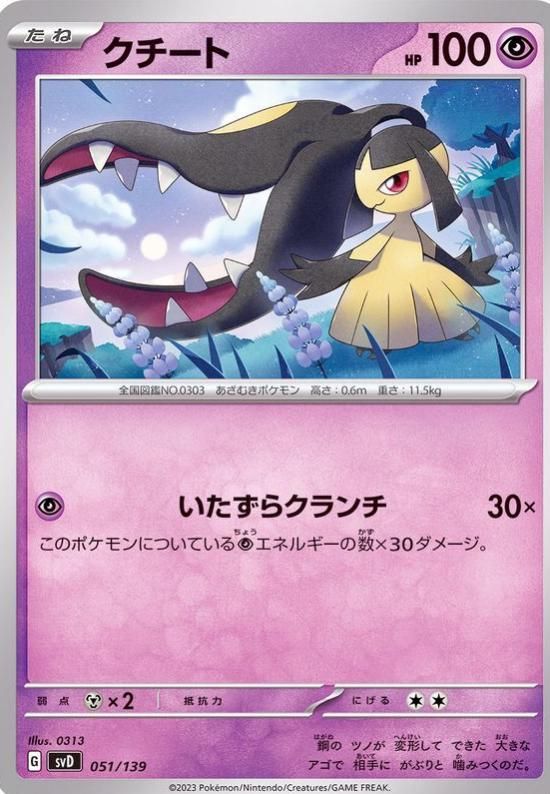
EX Emerald Mawile is a respected mid-era holo that appeals to both Mawile specialists and EX-series set collectors. It is a quieter card than some bigger EX-era names, which often helps it feel undervalued in high grade.
Compare PSA 10 pricing to raw and PSA 9 sales closely, because the gem-mint premium can be dramatic on older holos.
Estimated value: $1.73
- 3
Mawile PSA 10
EX Dragon · 2003 · 11/97
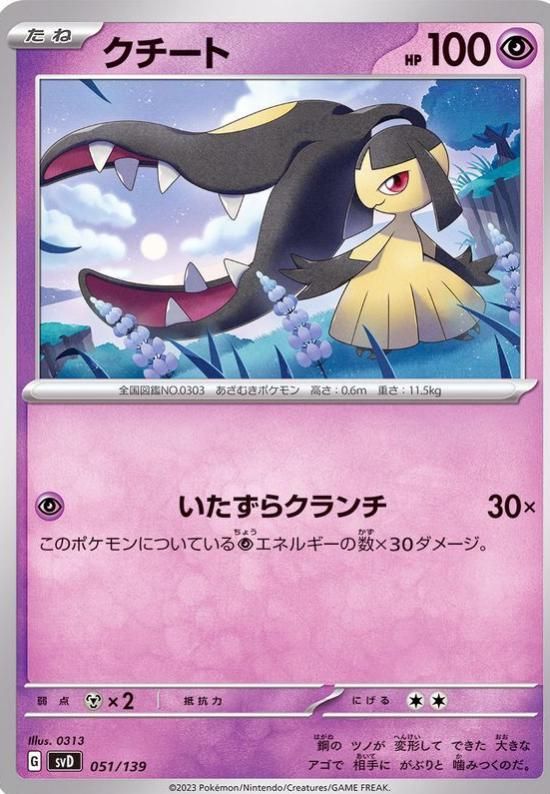
As an early EX-era Mawile, this EX Dragon printing is historically important for collectors building a timeline of the Pokémon's major releases. It benefits from the overall prestige of the first wave of Ruby & Sapphire-era expansions.
A PSA 10 example is best for registry-style collecting, but well-centered raw copies can also be worth setting aside for grading.
Estimated value: $1.73
- 4
Mawile PSA 10
Team Magma vs Team Aqua · 2004 · 18/95
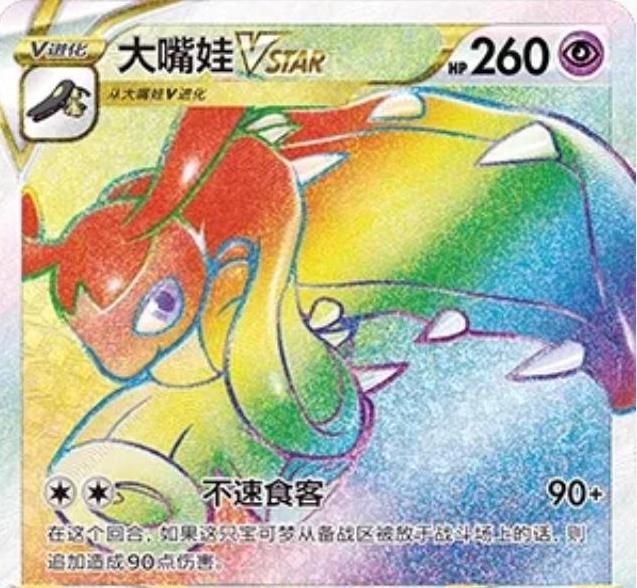
This set card stands out because Team Magma vs Team Aqua remains one of the most thematic releases in the EX era. That set identity gives Mawile more personality here than it would have in a standard expansion slot.
Look for sharp corners and minimal back whitening, as these mid-era rares often show storage wear.
Estimated value: $1.27
- 5
Mawile PSA 10
EX Ruby & Sapphire · 2003 · 24/109
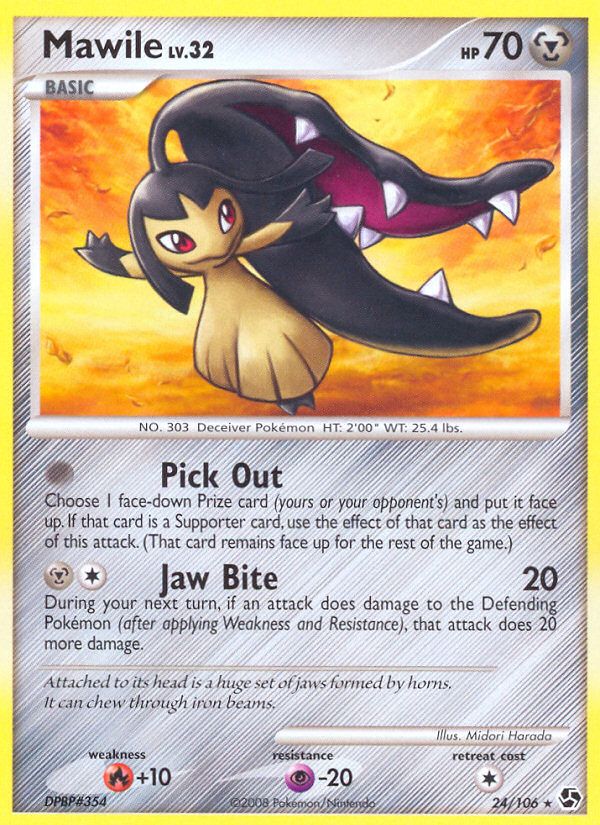
This is one of Mawile's foundational English EX-era cards and a key pickup for collectors who value first-wave historical relevance. It is not flashy, but it is meaningful within a complete character run.
This card is often a more affordable entry into graded EX-era Mawile collecting than the holo options.
Estimated value: $1.73
- 6
M Mawile-EX PSA 10
XY Promos · 2015 · XY104
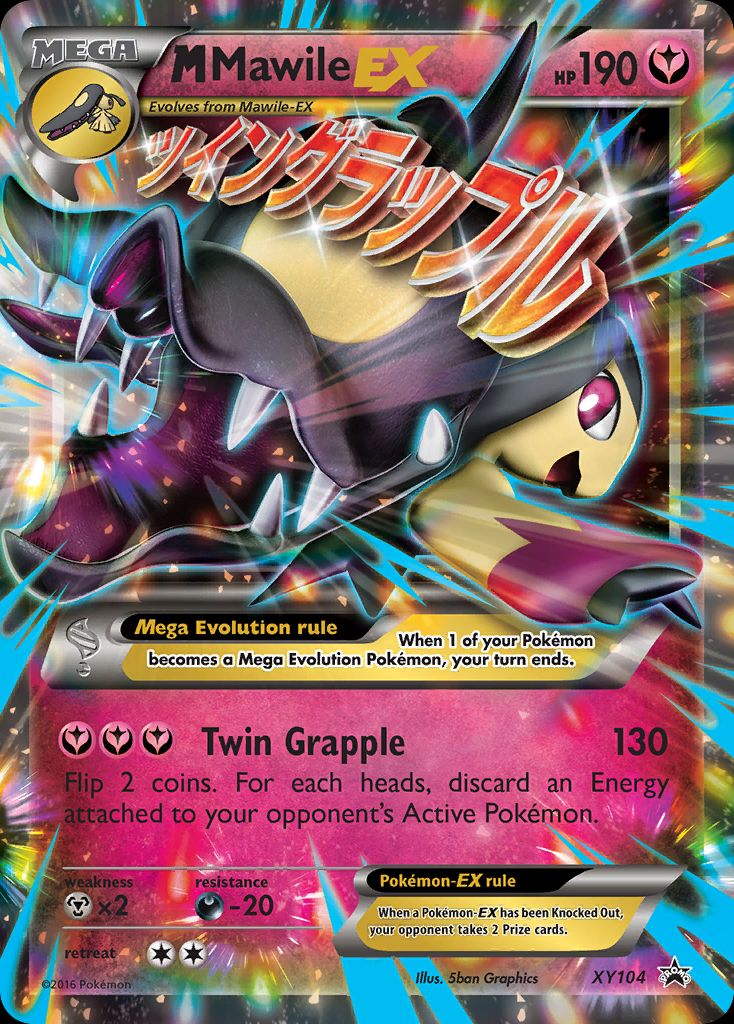
Mega Mawile brings the character's strongest battle-era identity into the graded conversation, and XY104 is one of the most recognizable Mawile promos in English. Promos like this can attract both Mawile collectors and Mega Evolution fans.
Sealed promo copies can grade well, but check for edge chipping and print imperfections before buying raw.
Estimated value: $18.37
- 7
Mawile PSA 10
Guardians Rising · 2017 · 140/145
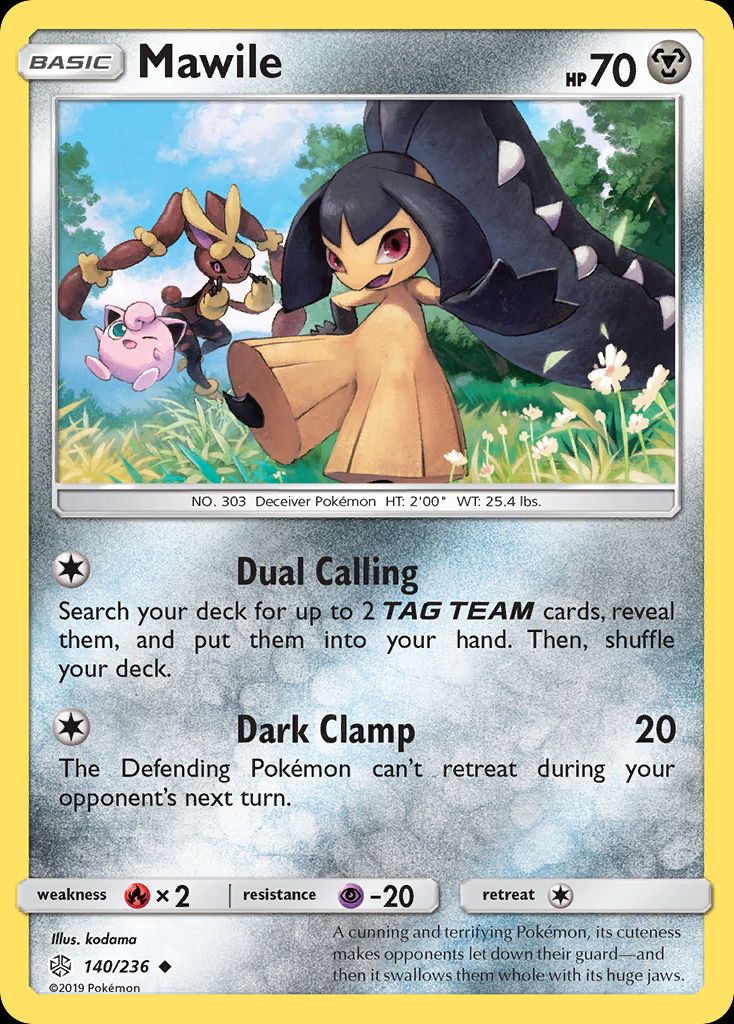
This Secret Rare from Guardians Rising is one of the most collectible modern English Mawile cards thanks to its premium rarity slot and strong visual finish. It is a natural bridge between old-school species collecting and modern slab demand.
Modern secret rares are easier to source in high grade, so buy the card, centering, and eye appeal rather than the label alone.
Estimated value: $14
- 8
Mawile-GX PSA 10
Unified Minds · 2019 · 141/236
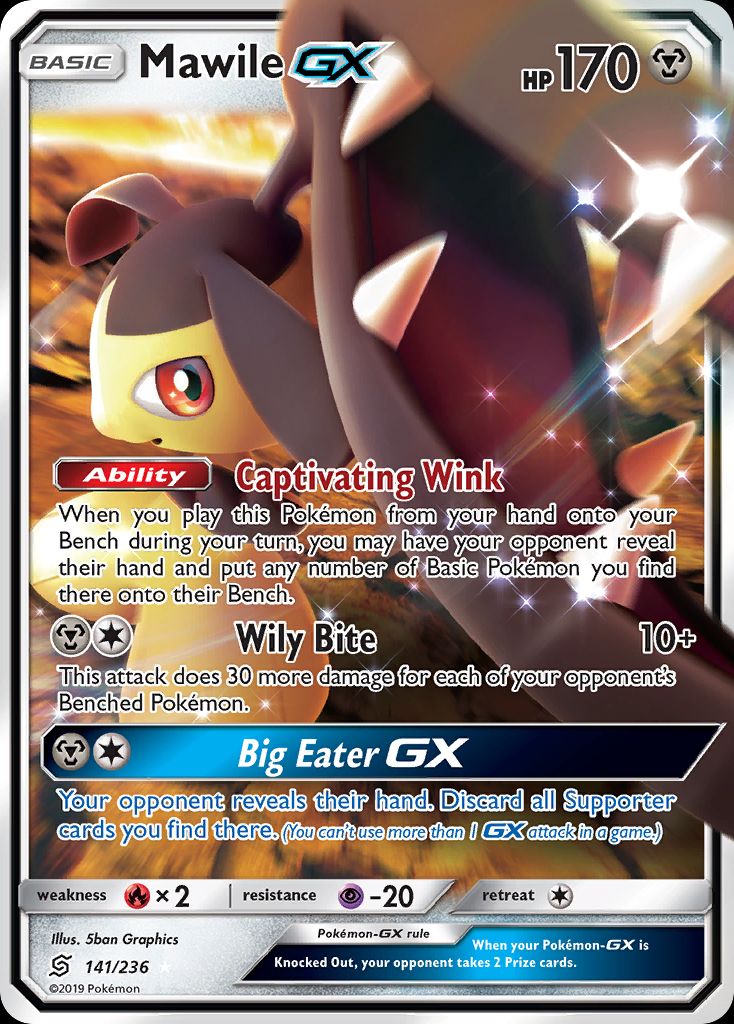
Mawile-GX Full Art is one of the cleanest modern showcase cards for the Pokémon and a staple for collectors who want a true ultra-rare slab. Unified Minds has a strong following, which adds credibility to the card beyond Mawile-only demand.
Focus on centering and texture cleanliness, since those are the details modern PSA 10 buyers scrutinize most.
Estimated value: $4
- 9
Mawile-GX PSA 10
Unified Minds · 2019 · 227/236
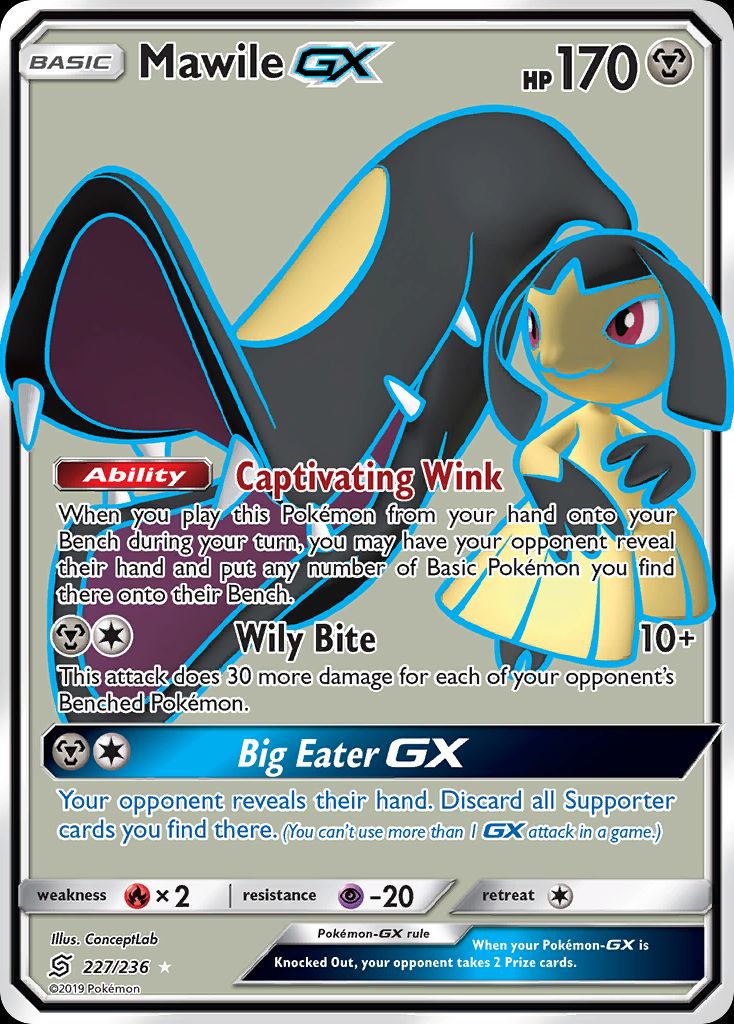
The rainbow rare version of Mawile-GX is one of the highest-rarity mainstream English Mawile cards and a natural target for gem-mint modern collectors. It has a stronger rarity profile than most standard Mawile releases, which helps it stand out in slab form.
If you prefer rarity over artwork, this is usually the better long-term pick than the standard full art.
Estimated value: $11
- 10
Mawile V PSA 10
Silver Tempest · 2022 · TG17/TG30
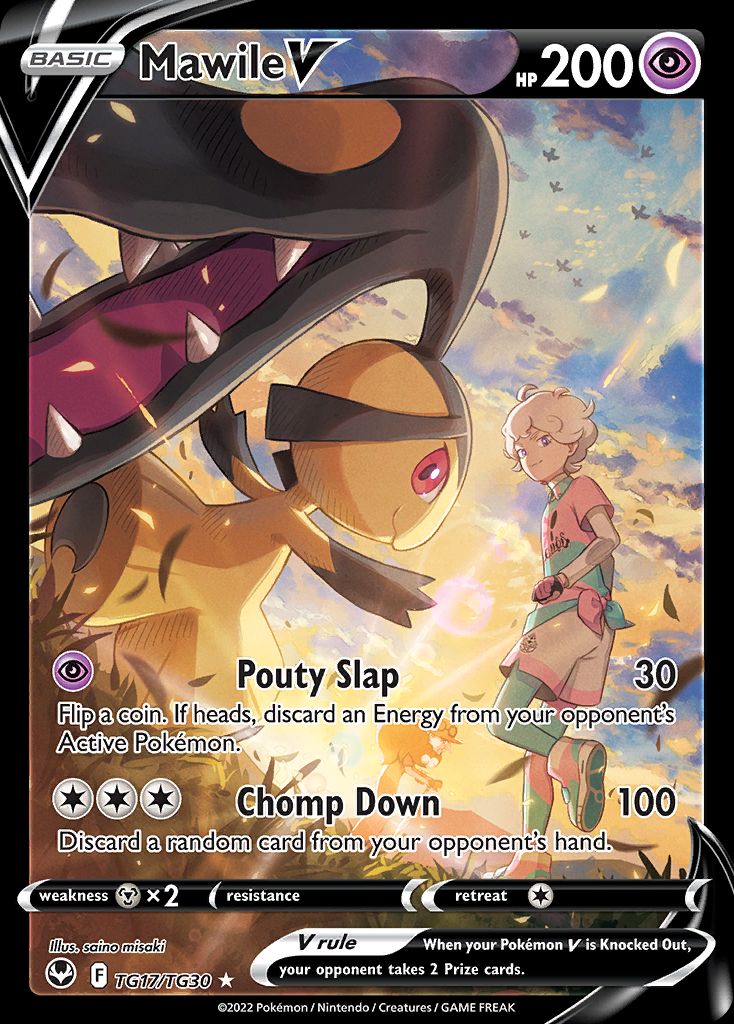
Trainer Gallery cards have become favorites among modern collectors, and Mawile V is one of the best display pieces for the species in the Sword & Shield era. It combines modern pull appeal with artwork-driven demand, making it a strong slab for newer collectors.
This is a good lower-risk PSA 10 target if you want a visually strong Mawile slab without paying EX-era scarcity premiums.
Estimated value: $13
Frequently asked questions
What is the rarest Mawile card?
For English collectors, EX-era Mawile holos in PSA 10 are among the toughest and most desirable because condition-sensitive print quality limits true gem-mint supply. Japanese-exclusive or lower-pop promo issues can also be scarcer depending on the grading population.
Is PSA 10 Mawile worth buying?
Yes, if you are focused on character collecting or niche Pokémon with strong artwork and lower competition than bigger names. The best buys are usually EX-era holos, notable modern secret rares, and visually strong full-art or Trainer Gallery cards.
How do I find Mawile card prices?
Check eBay sold listings for real transaction data, then compare with PriceCharting and PSA population reports for context. Slabfolio is useful for tracking graded price movement and organizing your Mawile slabs over time.
Whether you're building your first graded Mawile collection or managing a larger Pokémon card portfolio, tracking real market movement matters. Slabfolio helps collectors organize slabs, monitor values, and follow graded card price changes over time.
Related guides
Best Graded Jirachi Cards: Collector & Investor Guide
Jirachi has always held a special place in the Pokémon TCG hobby thanks to its Mythical status, strong fan appeal, and a card history that stretches from the EX era to modern Sword & Shield and Scarlet & Violet releases.
Best Graded Seviper Cards: Collector & Investor Guide
Seviper has never been the most expensive snake Pokémon in the hobby, but it has built a quietly loyal collector base thanks to its aggressive design, memorable rivalry with Zangoose, and a card history that stretches...
Best Graded Nincada Cards: Collector & Investor Guide
Nincada is not a headline Pokémon in the TCG, but that is exactly why it appeals to focused collectors.
Best Graded Skitty Cards: Collector & Investor Guide
Skitty is one of those Hoenn-era Pokémon that quietly built a loyal collector base through charming artwork, multiple EX-era printings, and a memorable presence across early 2000s sets.
Best Graded Lairon Cards: Collector & Investor Guide
Lairon is a niche favorite for collectors who appreciate the Hoenn era, Steel-type artwork, and the evolutionary line that leads into Aggron.
Best Graded Chimecho Cards: Collector & Investor Guide
Chimecho is a niche favorite that appeals to collectors who enjoy Hoenn-era Pokémon, understated artwork, and card lists that reward deep set knowledge.